Then & Now

Explore places through time

Drag between historic photographs and the same locations today.

↕Explore comparisonsBrowse the latest Then & Now photos+Submit your ownAdd a historic comparison

Explore Then & Now

Find historic photo comparisons near you, or explore locations around the world.

Explore popular locations

Submit your own

Submit

Search

Last 10 updates

  • The Boat Inn, Erbistock – Then & Now (1902–2026)

    Then and now comparison: The Boat Inn, Erbistock – Then & Now (1902–2026)View interactive comparison →

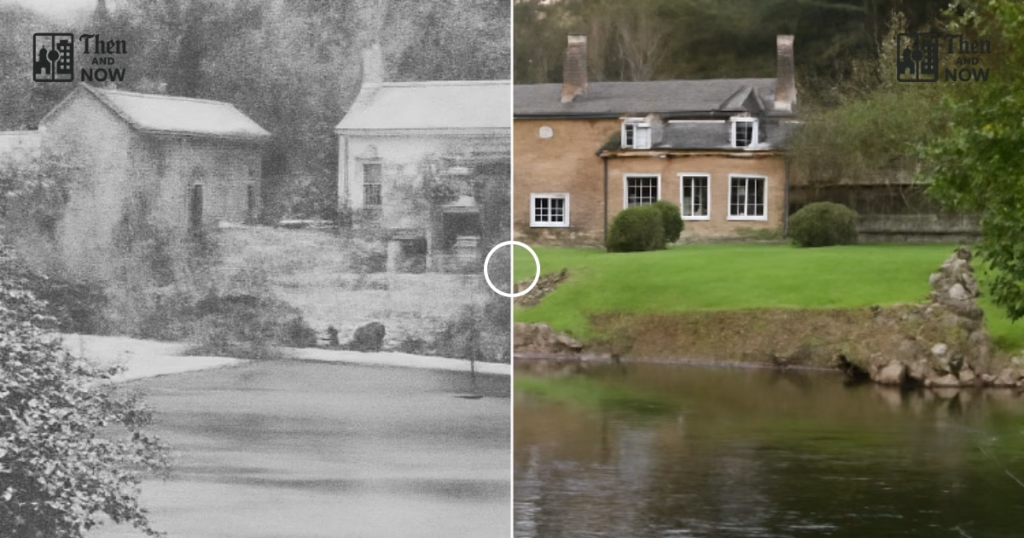
    The Boat Inn, a riverside pub in Erbistock, has stood since the 17th century, serving as a focal point for the community. Historically, it was linked to a hand-operated ferry that transported passengers and light goods across the river, utilising a windlass wheel and iron cable. This ferry service operated for centuries, providing essential connectivity before the advent of modern roads.

    However, as motor vehicles became prevalent and road networks improved in the mid-20th century, the ferry’s use declined significantly, eventually ceasing operations after World War II. Today, remnants of this historical mechanism, including the iron windlass, can still be found outside The Boat Inn, a reminder of the area’s past and its former role in local transport.
    (more…)

  • Morley Town Hall, Morley, West Yorkshire – Then & Now (1904–2025)

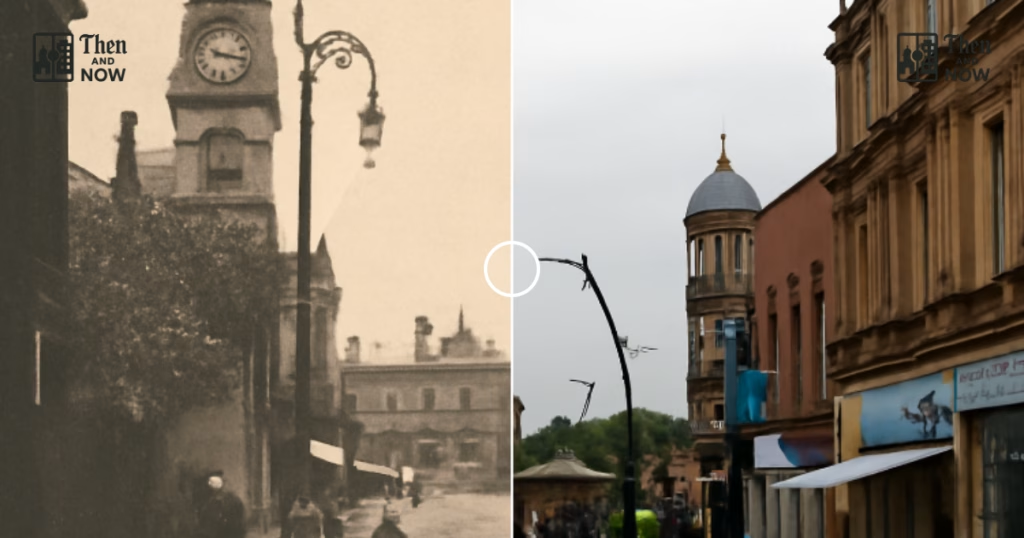
    Then and now comparison: Morley Town Hall, Morley, West Yorkshire – Then & Now (1904–2025)View interactive comparison →

    Morley Town Hall, situated on Queen Street in Morley, West Yorkshire, is a distinguished Grade I listed Neoclassical structure, notable for its impressive 160-foot domed clock tower. The building was inaugurated on October 16, 1895, showcasing a grand Roman portico that reflects the architectural styles of its era.

    In 1961, a significant fire incident at a nearby mill led to the destruction of the original timber-framed dome and the clock mechanism. Fortunately, restoration efforts were completed by December 1962, successfully returning the town hall to its former glory with a new clock and a restored tower. This site remains a prominent landmark in the community, symbolizing resilience and historical significance.

    (more…)

  • Beaulieu Abbey, Beaulieu, Hampshire – Then & Now (1779–2026)

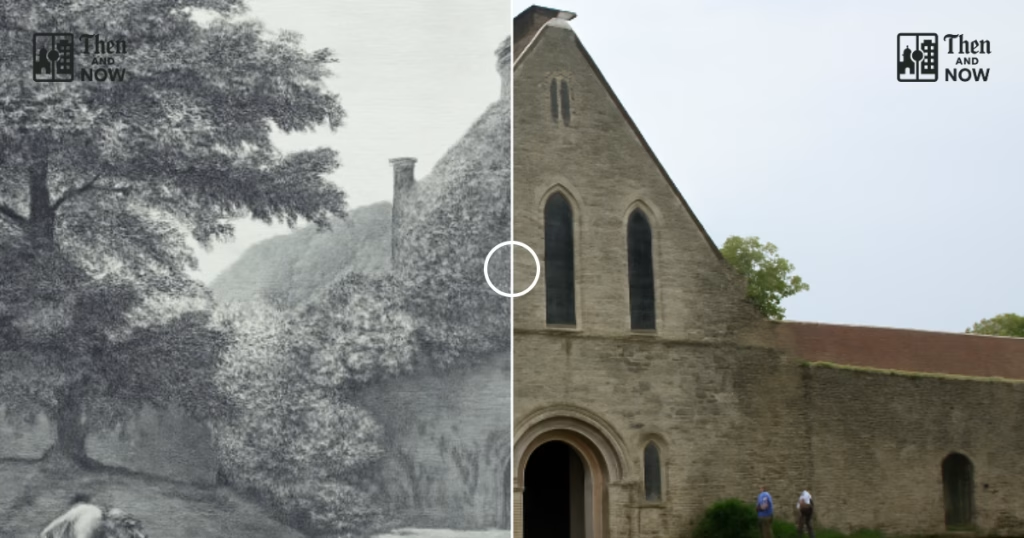
    Then and now comparison: Beaulieu Abbey, Beaulieu, Hampshire – Then & Now (1779–2026)View interactive comparison →

    Beaulieu Abbey, located in the New Forest, Hampshire, was founded in 1204 by King John as a Cistercian monastery. Monks from Cîteaux Abbey in France were brought in to establish this religious community, which thrived for over 300 years. The abbey was constructed using materials such as Caen stone and Quarr stone from the Isle of Wight, showcasing the architectural style of its time.

    However, the abbey’s existence came to an abrupt end in 1538 during the Dissolution of the Monasteries under Henry VIII. Following its dissolution, Thomas Wriothesley, 1st Earl of Southampton, acquired the estate, repurposing the site and using the abbey’s stone for new constructions, including Palace House. Today, the remaining structures, including the monks’ refectory, serve as a parish church, preserving a glimpse of the site’s rich history.

    (more…)

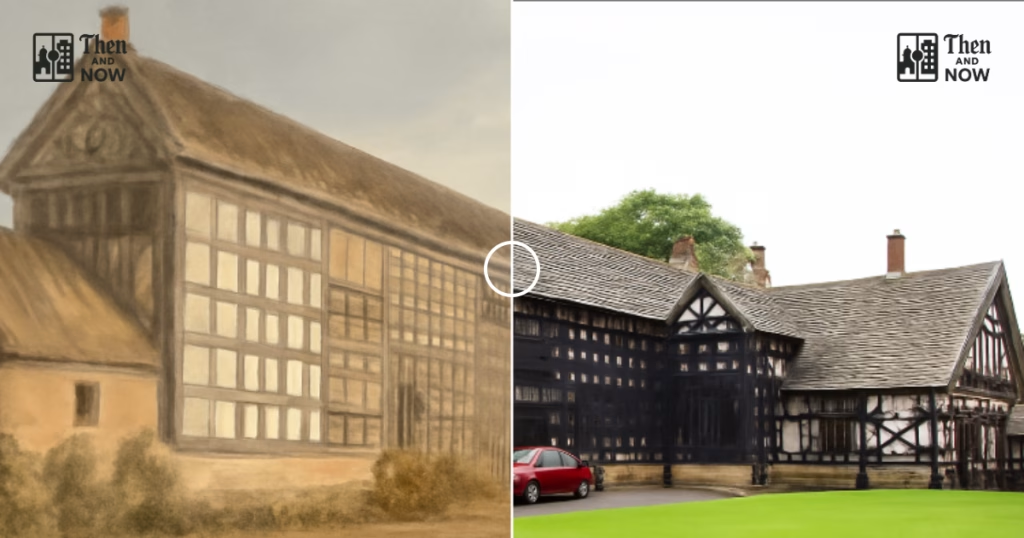
  • Samlesbury Hall – Then & Now (1814–2024)

    Then and now comparison: Samlesbury Hall – Then & Now (1814–2024)View interactive comparison →

    Samlesbury Hall, constructed in 1325, stands as a remarkable example of a timber-framed manor house in Lancashire. Its architectural evolution took place in the 16th century under Sir Thomas Southworth, who enhanced the structure with intricate black and white timber framing, a chapel, and secret priest hides, reflective of the challenges faced during periods of Catholic persecution.

    Following its sale in 1678 due to family debts, the hall underwent various transformations, serving as weaver tenements, a public house, and a boarding school. By the early 1920s, it was at risk of demolition but was saved in 1925 by local advocates. Today, this Grade I listed building is cherished as a museum, showcasing its rich historical significance.

    (more…)

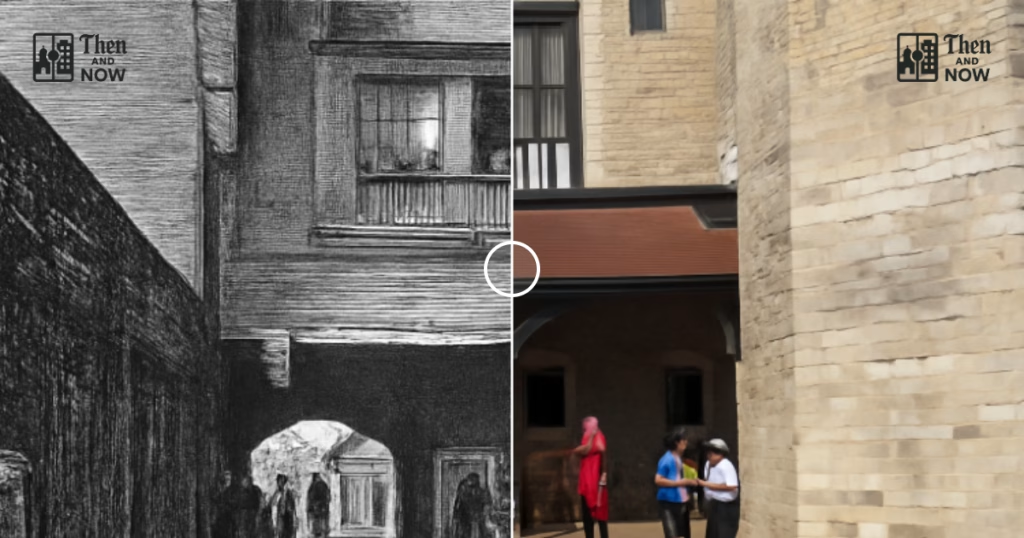
  • Byward Tower, London – Then & Now (1871–2025)

    Then and now comparison: Byward Tower, London – Then & Now (1871–2025)View interactive comparison →

    The Byward Tower, constructed during the reign of King Edward I between 1275 and 1281, serves as a significant historical entrance to the Tower of London’s Outer Ward. Originally designed as a defensive gateway, it reflects the architectural style of the late 13th century.

    This comparison captures the transformation of the Byward Tower from 1871 to today, showcasing both the preservation efforts and the impact of modern influences on this iconic medieval structure. The enduring presence of the tower amidst the changing landscape of London highlights its role in the city’s rich history.

    (more…)

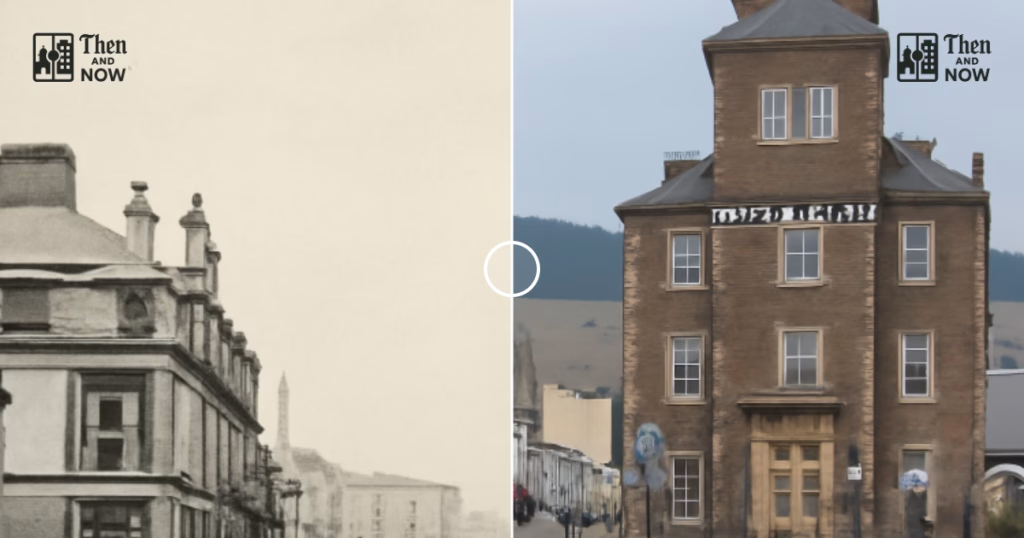
  • Argyll Hotel, Dunoon – Then & Now (1910–2024)

    Then and now comparison: Argyll Hotel, Dunoon – Then & Now (1910–2024)View interactive comparison →

    The Argyll Hotel in Dunoon stands as a significant example of Victorian architecture, with its origins tracing back to 1837. A notable feature of the building is the Italianate tower, which was added in 1876, enhancing its distinctive profile against the skyline. Initially catering to 19th-century visitors seeking leisure by the water, the hotel later gained popularity as a retreat for U.S. Navy personnel during the Cold War era. Today, the structure remains a cherished landmark, reflecting the evolving history of tourism and military presence in the region. Its designation as a Category B listed property underscores its architectural and cultural importance within Dunoon.

    (more…)

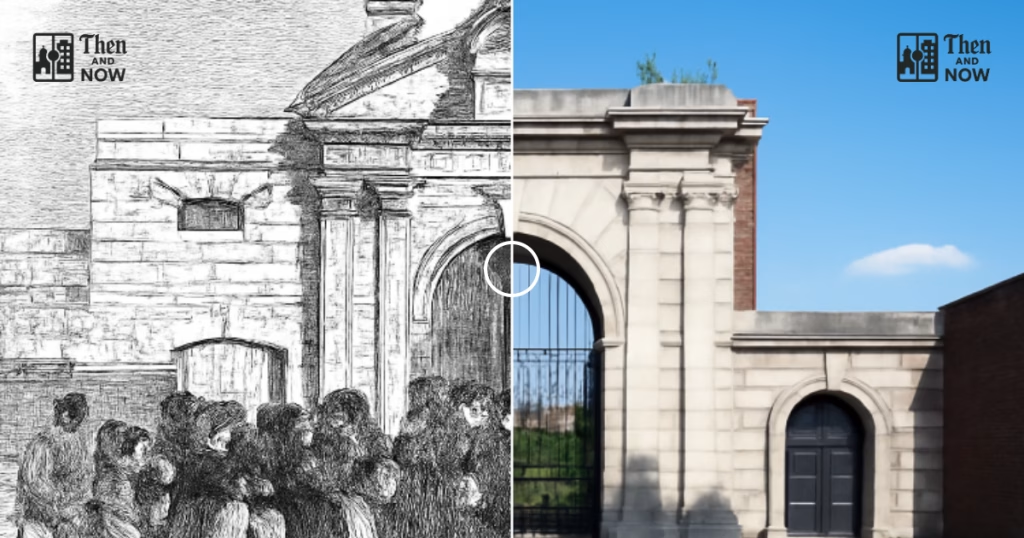
  • King James’s Gate, Portsmouth – Then & Now (1856–2025)

    Then and now comparison: King James’s Gate, Portsmouth – Then & Now (1856–2025)View interactive comparison →

    King James’s Gate, constructed in 1687, served as an important part of Portsmouth’s defensive structures. This notable archway was integral to the city’s fortifications until its dismantling in the 1860s, a time when many defensive works were being removed. While the gate was eventually reconstructed at a different location, this process resulted in the loss of a significant portion of its original stonework, altering its historical integrity. The present appearance of King James’s Gate reflects these changes, showcasing a modern interpretation of a once-vital element of Portsmouth’s military architecture.

    (more…)

  • Pulteney Bridge, Bath – Then & Now (1805–2025)

    Then and now comparison: Pulteney Bridge, Bath – Then & Now (1805–2025)View interactive comparison →

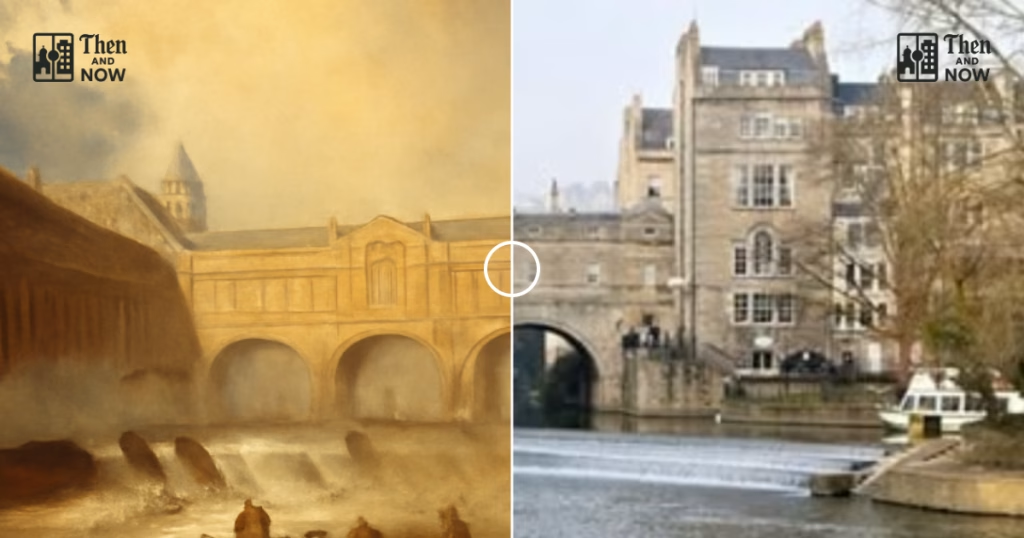
    Pulteney Bridge, an exquisite example of Georgian architecture, was completed in 1774. Renowned for its unique design, it is among a select few bridges globally that feature retail outlets along both sides of its structure. The bridge spans the River Avon in Bath, a city celebrated for its Roman heritage and stunning Georgian buildings. The juxtaposition of an 1805 oil painting with a contemporary photograph highlights the enduring charm of this landmark, which has remained a focal point in the city for over two centuries. The bridge not only serves as a vital pedestrian route but also as an emblem of Bath’s architectural legacy.

    (more…)

  • Kelmscott Manor, Kelmscott, Oxfordshire – Then & Now (1917–2024)

    Then and now comparison: Kelmscott Manor, Kelmscott, Oxfordshire – Then & Now (1917–2024)View interactive comparison →

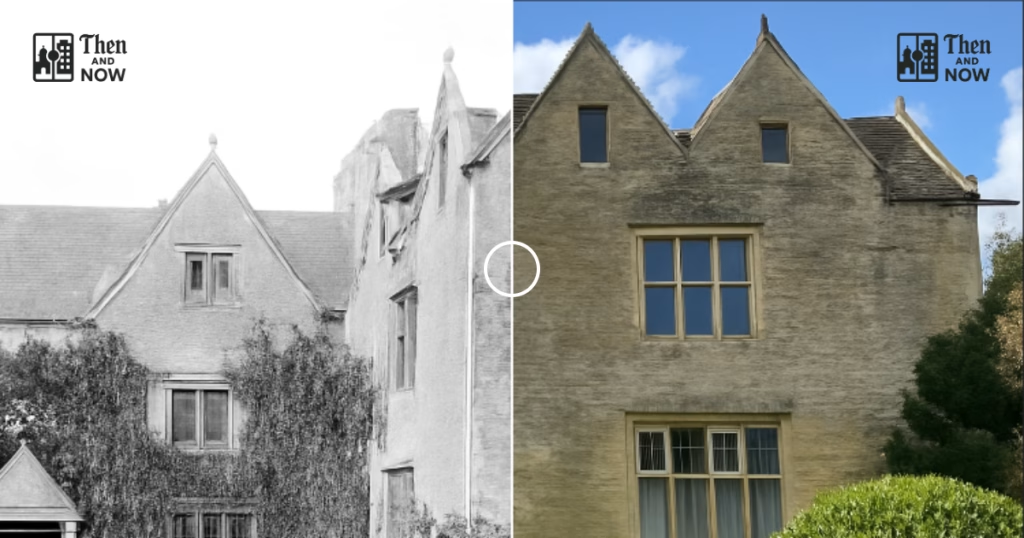
    Kelmscott Manor, a quintessential Cotswold farmhouse from the 16th century, is renowned for its association with the influential designer and writer William Morris. Purchased in 1871, the manor served as a tranquil retreat for Morris, whose encounters with the surrounding landscape greatly influenced his artistic vision. The building embodies elements of traditional Cotswold architecture, showcasing the region’s historic charm. Today, the manor continues to attract visitors, offering a glimpse into the past while celebrating Morris’s legacy and his connection to the natural beauty of the English countryside. The comparison of past and present highlights the enduring significance of this historic site.

    (more…)

  • Chavenage House, Tetbury – Then & Now (1929–2024)

    Then and now comparison: Chavenage House, Tetbury – Then & Now (1929–2024)View interactive comparison →

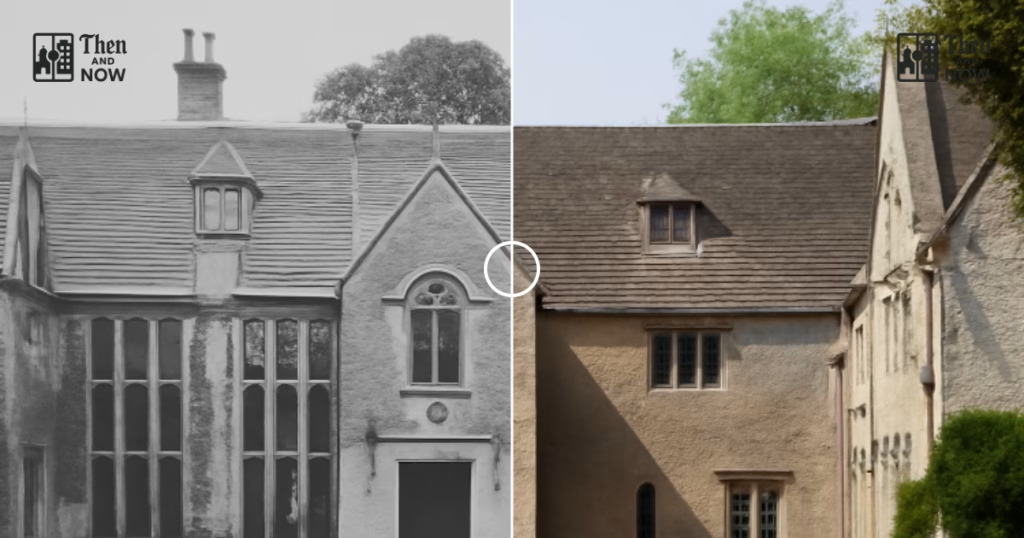
    Chavenage House, constructed in 1576, stands as a notable example of Elizabethan architecture. This historic manor is particularly recognized for its association with Oliver Cromwell, who visited in 1648 during the tumultuous period leading up to the execution of King Charles I.

    Today, Chavenage House continues to be a private residence, offering a glimpse into the past with its original 16th-century wood paneling and rare tapestries that adorn its walls. The estate also houses various artifacts from the Civil War era, reflecting its rich historical significance and the enduring legacy of the events that unfolded within its walls.

    (more…)