Then & Now

Explore places through time

Drag between historic photographs and the same locations today.

↕Explore comparisonsBrowse the latest Then & Now photos+Submit your ownAdd a historic comparison

Explore Then & Now

Find historic photo comparisons near you, or explore locations around the world.

Explore popular locations

Submit your own

Submit

Search

Last 10 updates

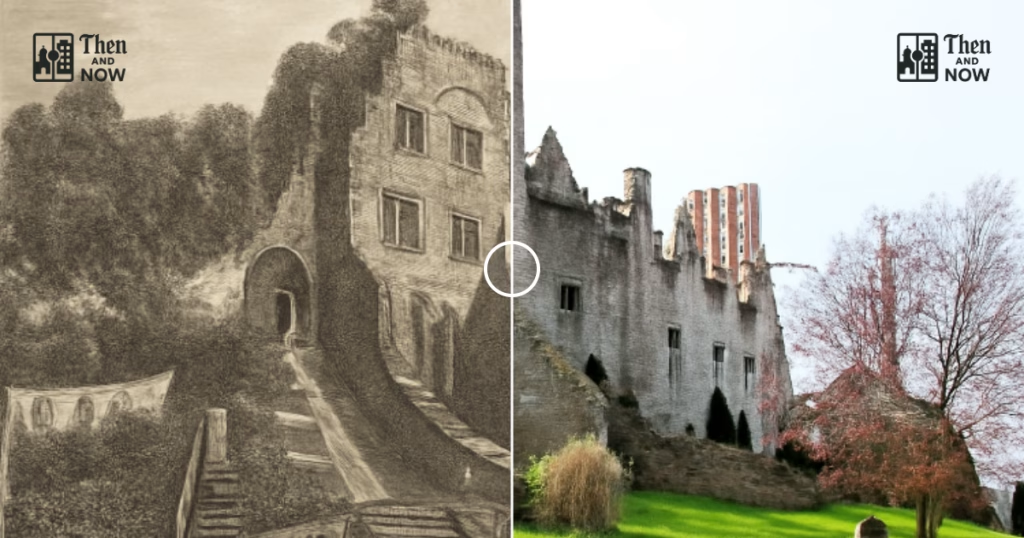
  • Wales’ Hay-on-Wye Castle – Then & Now (1797–2025)

    Then and now comparison: Wales’ Hay-on-Wye Castle – Then & Now (1797–2025)View interactive comparison →

    Hay-on-Wye Castle, established around the year 1200 by the Norman lord William de Braose, is steeped in a tumultuous history marked by the conflicts along the Anglo-Welsh border. Originally constructed over an earlier earthwork fortification, the castle transitioned into a fortified manor during the 1600s, reflecting the changing needs and styles of the time.

    However, its storied past was marred by a catastrophic fire in 1939, which left the once-magnificent structure in ruins. Today, the remnants of the castle stand as a poignant reminder of its historical significance and the turbulent events that shaped its existence over the centuries.
    (more…)

  • Tong Castle, Shropshire – Then & Now (1903–2025)

    Then and now comparison: Tong Castle, Shropshire – Then & Now (1903–2025)View interactive comparison →

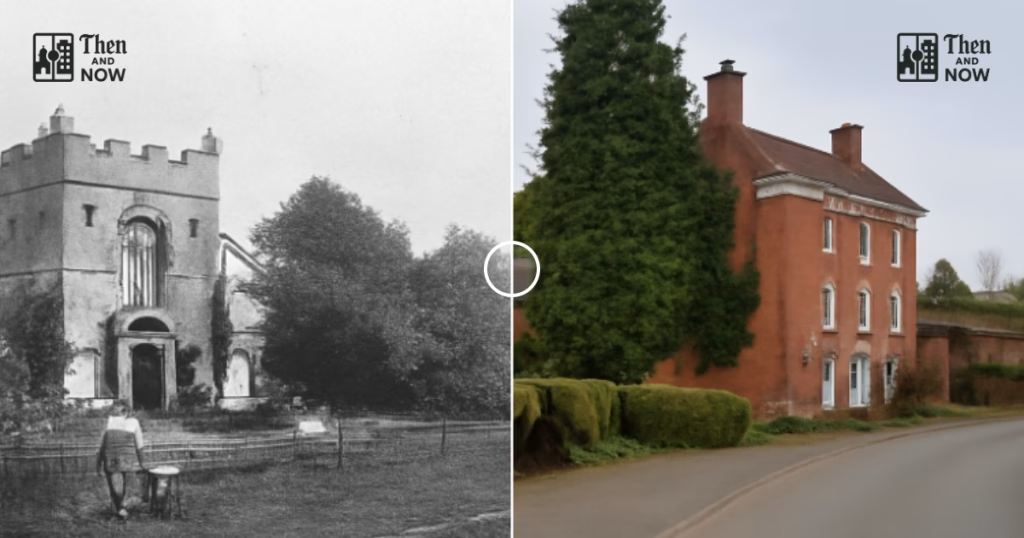
    Tong Castle, with its iconic Gothic Old Post Office, once served as the northern entrance to the estate, highlighting the area’s historical significance. A snapshot from 1903 captures a horse and cart navigating the road, reflecting a time when such transport was commonplace. Fast forward to 2025, and the landscape has undergone significant transformation. The castle-like facade has disappeared, replaced by modern developments, and the original road has been paved over. Despite these changes, the distinctive curve of the road and the essence of the village continue to resonate, preserving a sense of continuity amidst the evolving surroundings.

    (more…)

  • Pateley Bridge High Street – Then & Now (1902–2025)

    Then and now comparison: Pateley Bridge High Street – Then & Now (1902–2025)View interactive comparison →

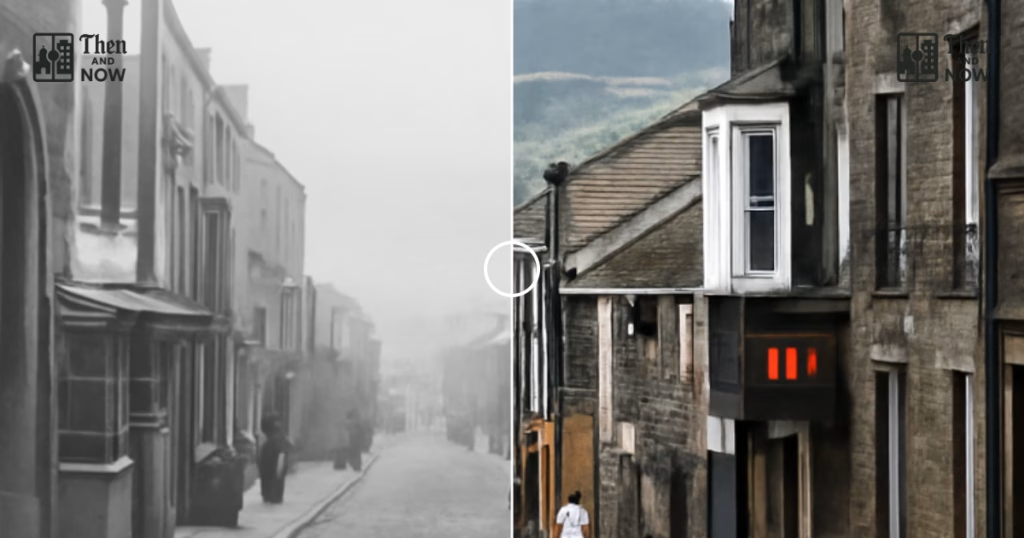
    Pateley Bridge High Street boasts a rich history dating back to its market charter granted in 1320. The area flourished due to local industries such as lead mining, stone quarrying, and textiles, which shaped its development over the centuries.

    Today, visitors can stroll along the picturesque, sloping street, where an array of historic stone structures stands proudly alongside charming independent shops. Notably, the world’s oldest sweet shop, established in 1827, continues to delight locals and tourists alike, contributing to the street’s vibrant character and historical significance. The blend of heritage and modern commerce reflects the enduring appeal of Pateley Bridge.

    (more…)

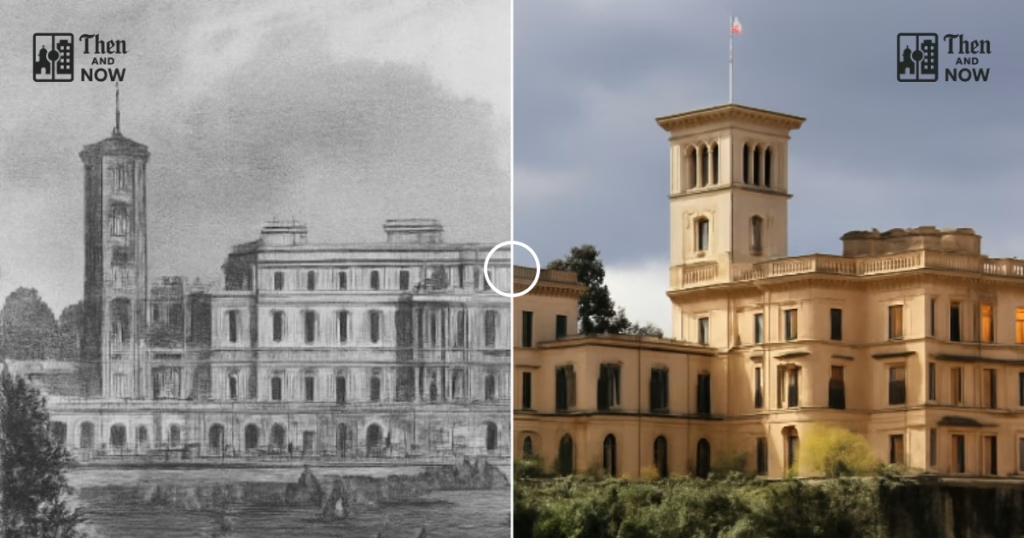
  • Osborne House, East Cowes – Then & Now (1870–2025)

    Then and now comparison: Osborne House, East Cowes – Then & Now (1870–2025)View interactive comparison →

    Osborne House, constructed between 1845 and 1851, served as a private retreat for Queen Victoria and Prince Albert, reflecting their royal lifestyle and artistic tastes. Located on the Isle of Wight, this grand residence was designed to resemble an Italian Renaissance palazzo, showcasing splendid gardens and stunning views of the Solent.

    Following Queen Victoria’s death in 1901, the estate transitioned to public ownership under King Edward VII, ensuring that the historical significance of Osborne House would be preserved for future generations. Today, it stands as a testament to Victorian architecture and royal heritage, attracting visitors keen to explore its rich history and picturesque surroundings.

    (more…)

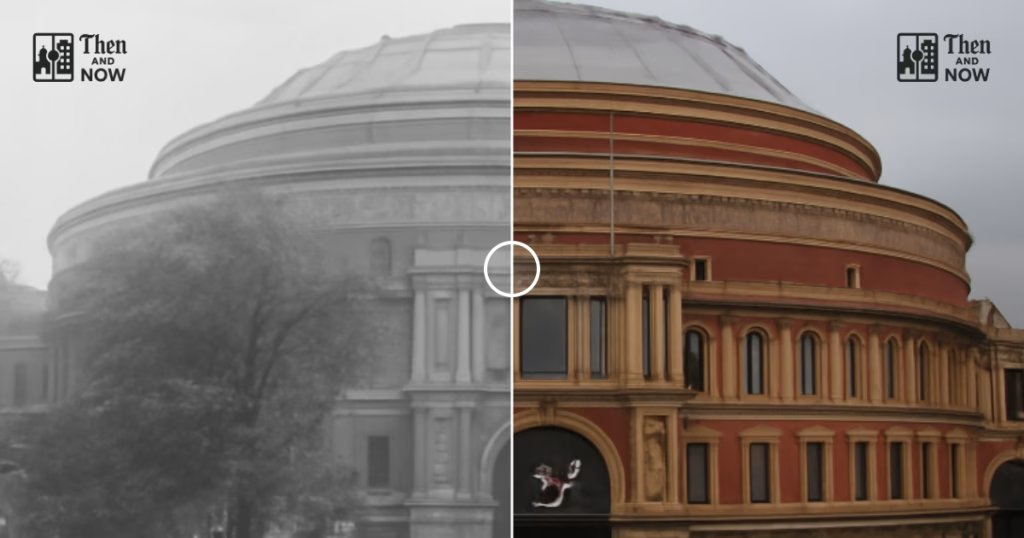
  • Royal Albert Hall, South Kensington – Then & Now (1913–2026)

    Then and now comparison: Royal Albert Hall, South Kensington – Then & Now (1913–2026)View interactive comparison →

    The Royal Albert Hall, inaugurated in 1871 by Queen Victoria, stands as a tribute to her husband, Prince Albert. Designed with inspiration drawn from ancient Roman amphitheatres, this iconic venue has played a pivotal role in the cultural life of the UK. Over the years, it has welcomed a diverse array of events, showcasing its versatility as a performance space. From classical music and theatrical productions to modern concerts and significant political gatherings, the Hall continues to be a landmark of artistic expression and communal celebration in London. Its rich history reflects the evolving nature of entertainment and public life in the city.

    (more…)

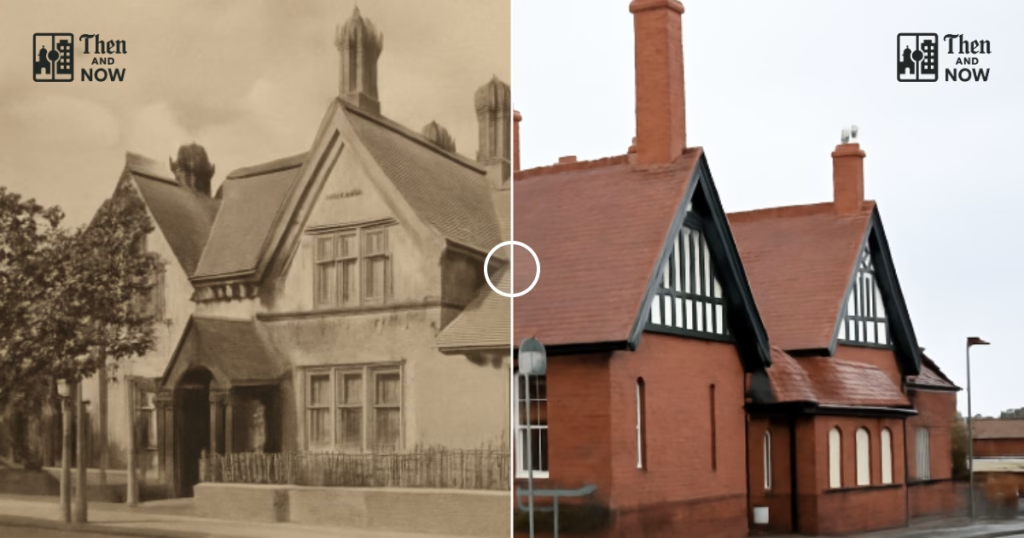
  • Bromyard Cottage – Then & Now (1905–2025)

    Then and now comparison: Bromyard Cottage – Then & Now (1905–2025)View interactive comparison →

    Bromyard Cottage Hospital, established in 1869, represents a significant chapter in the development of rural healthcare in Herefordshire. As one of the early examples of the cottage hospital movement, it was built to address local medical needs through community support and funding. These hospitals played a vital role in offering accessible emergency and surgical care, serving as a humane alternative to the often harsh conditions of workhouse infirmaries.

    Although Bromyard Cottage Hospital had to cease operations in 1917 due to financial difficulties, it paved the way for the region’s healthcare evolution. By 1948, many of Herefordshire’s cottage hospitals had transitioned into the NHS, ensuring that the legacy of community-based healthcare continued. The image comparison highlights the enduring influence of such institutions in the landscape of local healthcare.

    (more…)

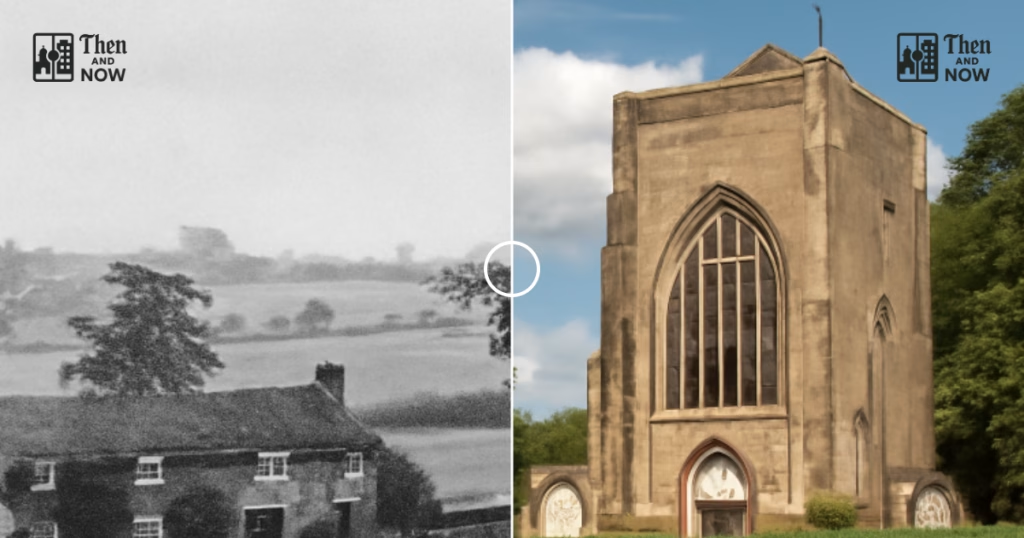
  • Beauchief Abbey, Sheffield – Then & Now (1906–2026)

    Then and now comparison: Beauchief Abbey, Sheffield – Then & Now (1906–2026)View interactive comparison →

    Beauchief Abbey, established in the late 12th century, was initially a flourishing religious site for the Premonstratensian order, contributing to both spiritual and industrial life until its dissolution in the 16th century. The abbey suffered significant decline in the following centuries, with much of its stone repurposed for nearby Beauchief Hall.

    Adjacent to the abbey, a quaint cottage was constructed around 1750, serving as an estate lodge. This building, along with the abbey’s restored west tower and chapel added in the 1670s by Edward Pegge, stands as a testament to the area’s historical significance and architectural evolution over the centuries.

    (more…)

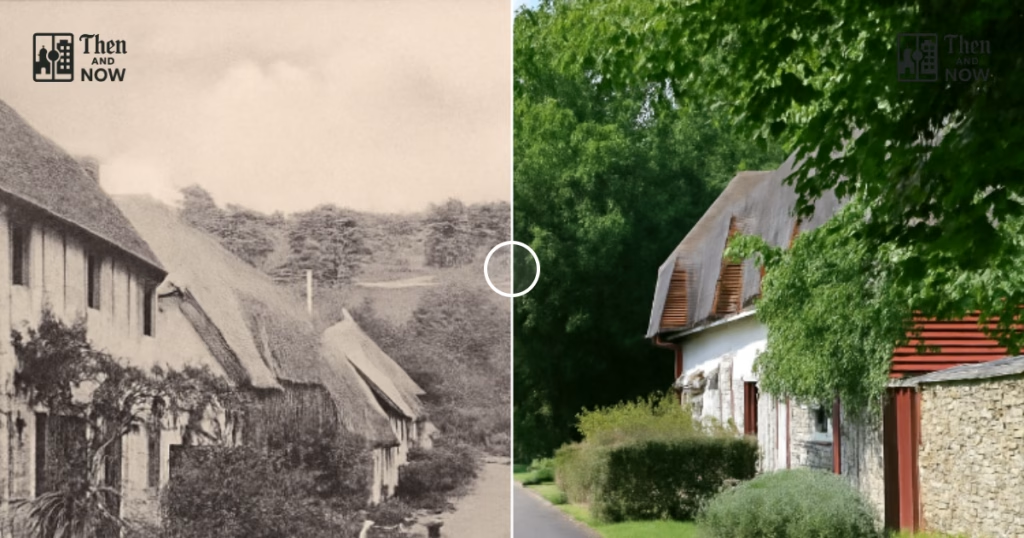
  • Church Street, Wherwell – Then & Now (1890–2026)

    Then and now comparison: Church Street, Wherwell – Then & Now (1890–2026)View interactive comparison →

    Church Street in Wherwell showcases a remarkable continuity in its architectural charm and historical significance. This picturesque street, which connects to the parish church of St Peter and the Holy Cross, features an array of thatched, timber-framed cottages dating back to the 16th and 17th centuries. Many of these homes were constructed using oak beams and stone repurposed from the nearby Wherwell Abbey, a Benedictine nunnery established in AD 986 by Queen Elfrida and dissolved in 1539 during the reign of Henry VIII. The enduring character of Church Street highlights the area’s rich heritage, reflecting a sense of place that remains largely unchanged over centuries.

    (more…)

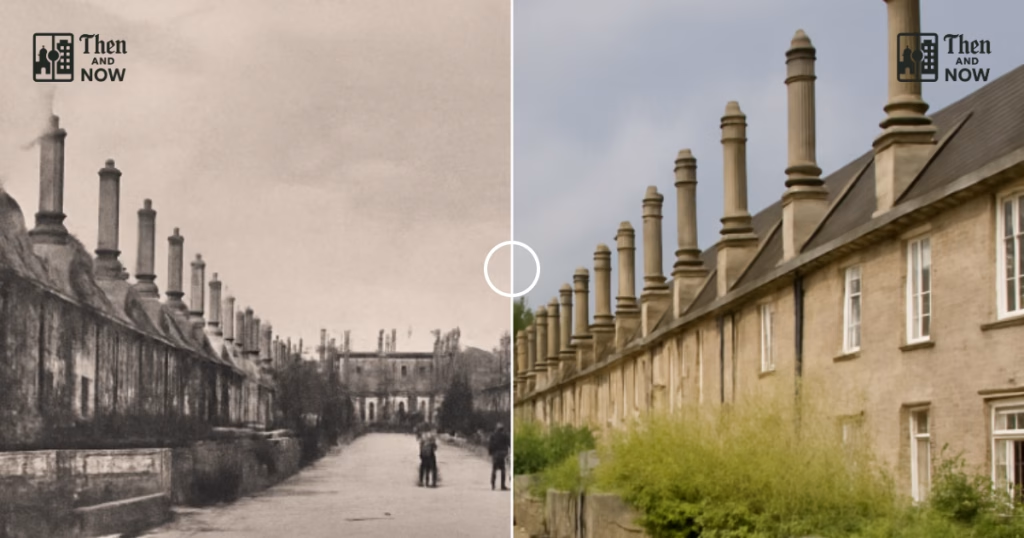
  • Wells Cathedral – Then & Now (1900–2025)

    Then and now comparison: Wells Cathedral – Then & Now (1900–2025)View interactive comparison →

    Vicars’ Close in Wells, Somerset, is notable for its historical significance as the residence for the Vicars Choral, established in 1348 to serve Wells Cathedral. This unique street was designed as a self-sufficient medieval community, featuring essential amenities such as a chapel, library, and hall, all connected to the cathedral by a covered bridge known as Vicars’ Hall.

    While the street has undergone some modifications over the centuries, including the addition of tall chimneys in the 15th century for improved ventilation, it remarkably preserves much of its original 14th-century architecture. Today, Vicars’ Close continues its long-standing tradition of housing cathedral vicars, organists, and choir members, making it a living testament to its medieval roots.

    (more…)

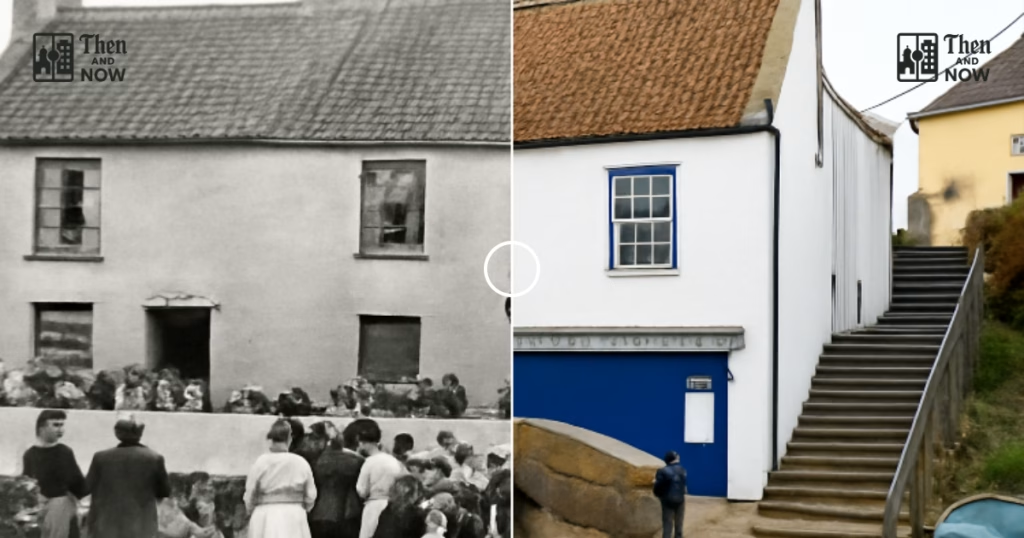
  • The Old Coastguard Station, Robin Hoods Bay – Then & Now (1900–2026)

    Then and now comparison: The Old Coastguard Station, Robin Hoods Bay – Then & Now (1900–2026)View interactive comparison →

    The Old Coastguard Station, located in the picturesque fishing village of Robin Hoods Bay, North Yorkshire, has remained largely unchanged since its construction around 1825. Initially established to oversee the local smuggling activities and ensure the safety of the coastline, this historic structure was strategically positioned above the slipway, allowing for effective surveillance and prompt rescue operations.

    After serving its purpose for over a century, the station was decommissioned in 1988. In 1998, it found new life when the National Trust took ownership, transforming it into a visitor centre that educates the public about the area’s rich maritime history and its significance in local heritage.

    (more…)