EXPLORE PLACES THROUGH TIME
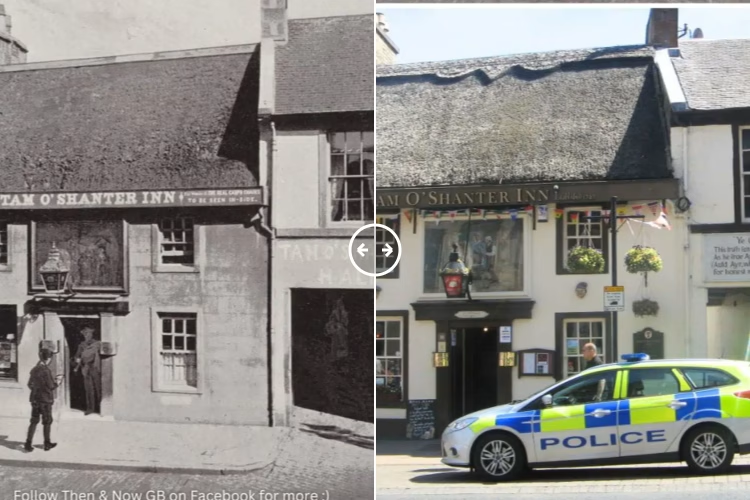
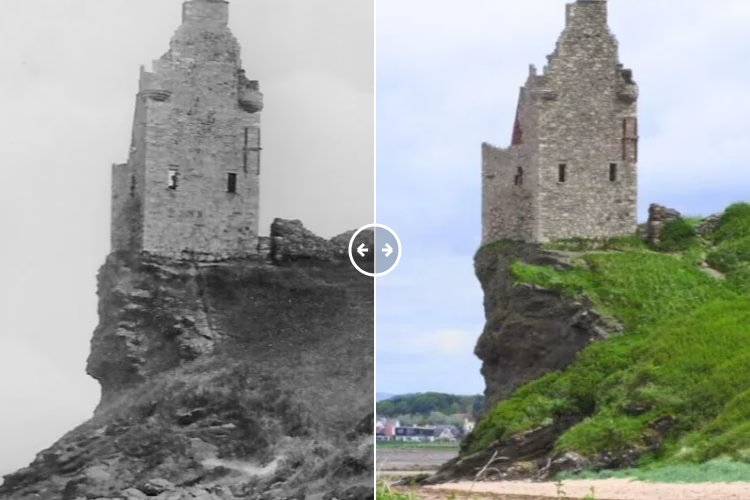
Ayr Then & Now
Discover how Ayr has changed through historic and modern photographs.
A little history of Ayr
Ayr, Scotland
Ayr, located on the southwest coast of Scotland along the Firth of Clyde, has a rich history dating back to at least 1197 when King William the Lion ordered the construction of a castle between the River Ayr and the River Doon. This strategic position led to the establishment of Ayr as a royal burgh and market town in 1205, with the town rapidly developing into a significant seaport and administrative centre for Ayrshire.
Throughout the medieval period, Ayr's port thrived, exporting goods such as fish, hide, and wool, and importing salt and wine. The town also played a pivotal role in the Plantation of Ulster during the 17th century, with many settlers from Ayrshire moving to Northern Ireland. In 1652, during the Cromwellian era, Ayr served as a base and fortress for Oliver Cromwell's forces, with substantial fortifications constructed along the mouth of the River Ayr.
Ayr's architectural heritage includes the Auld Brig, a medieval bridge crossing the River Ayr, which has been a focal point of conservation efforts. The town also boasts the Wallace Tower, commemorating the imprisonment of William Wallace by the English in the late 13th century.
Today, Ayr continues to be a vibrant town, reflecting its historical significance through its preserved landmarks and ongoing cultural heritage.