Author: Jon Hall

  • St Giles’ Cathedral 1883 – 2025

    St Giles’ Cathedral 1883 – 2025

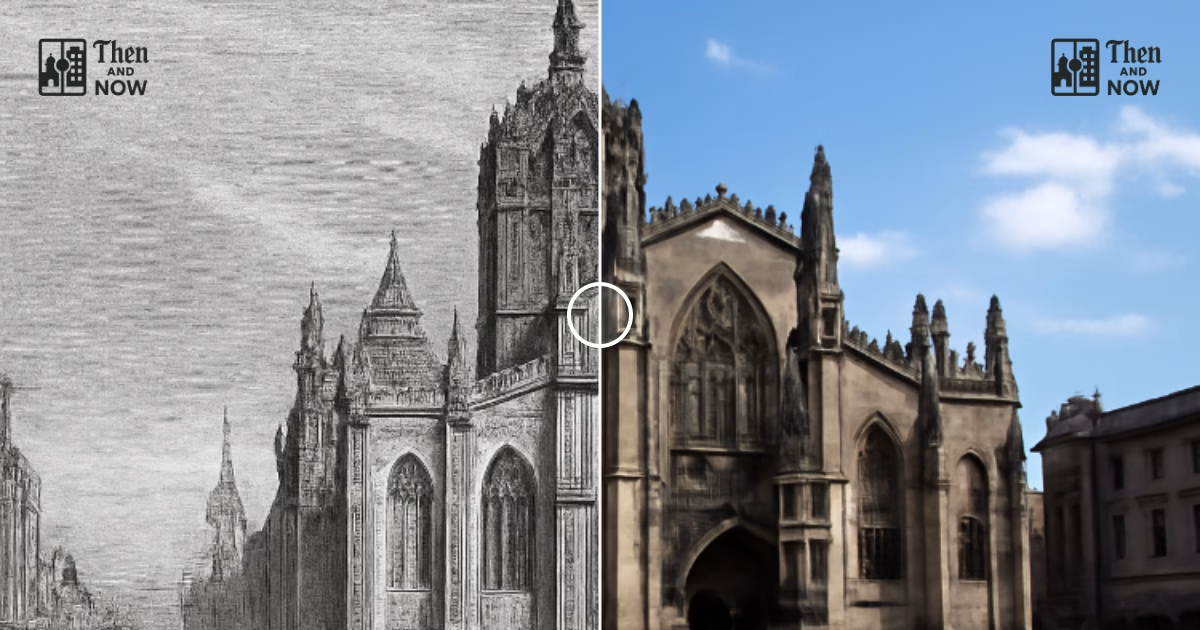
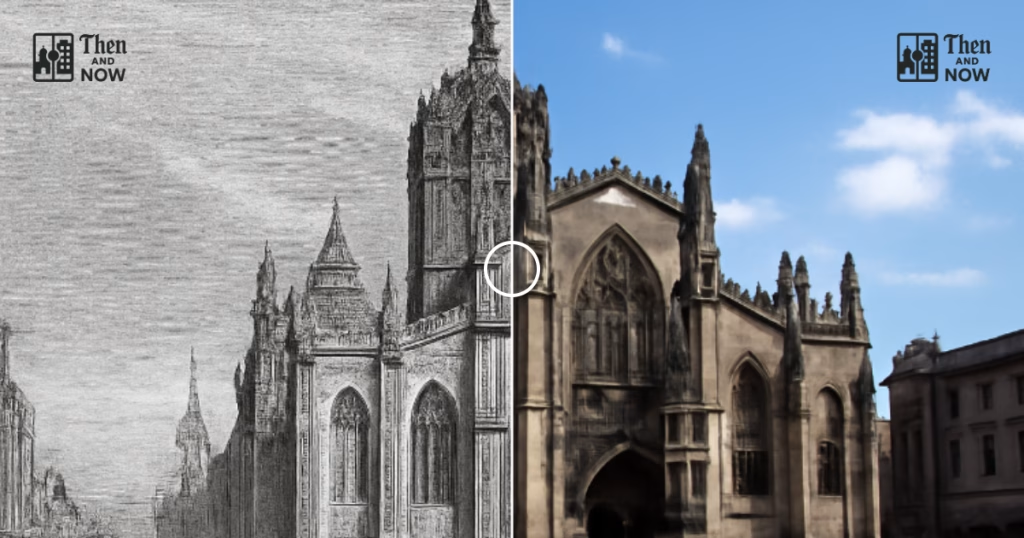
    Then and now comparison: St Giles’ Cathedral 1883 – 2025View interactive comparison →

    St Giles’ Cathedral, located on Edinburgh’s historic Royal Mile, has stood as a significant religious site since its establishment in 1124 under King David I. Over the centuries, it has witnessed numerous events that have shaped the city and its faith. The cathedral’s striking crown steeple, a defining feature of Edinburgh’s skyline, was added following a destructive fire in 1385, which led to substantial reconstruction efforts. Today, it continues to serve as a focal point for worship and community gatherings, reflecting both its rich heritage and its ongoing role in the life of the city.
    (more…)

  • The George Inn 1900 – 2025

    The George Inn 1900 – 2025

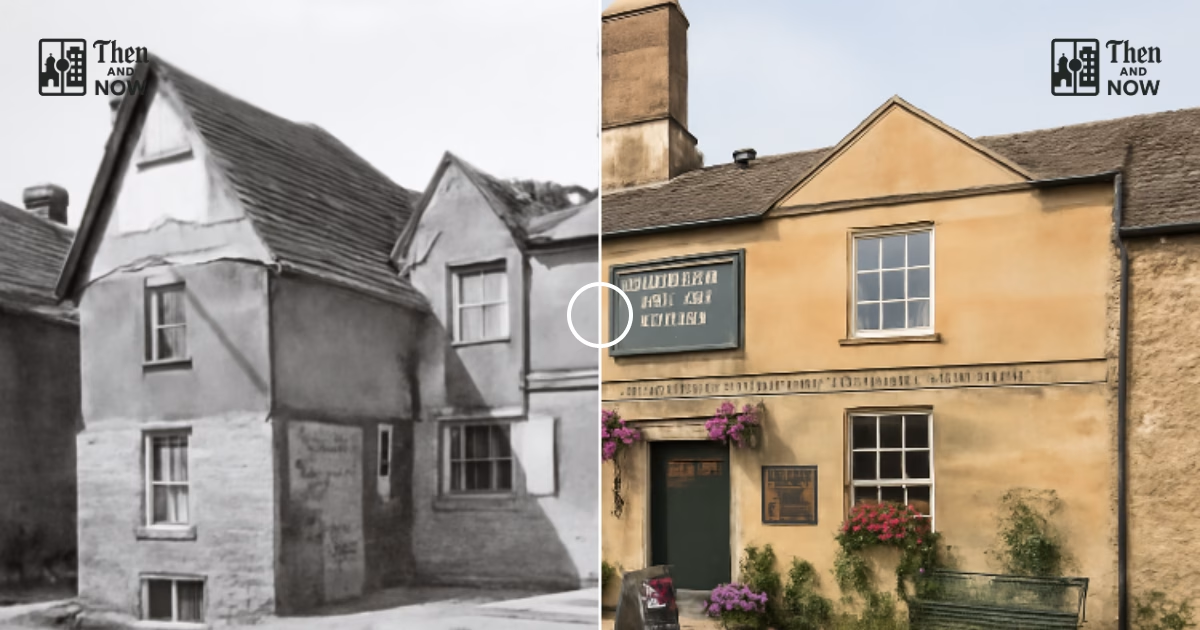
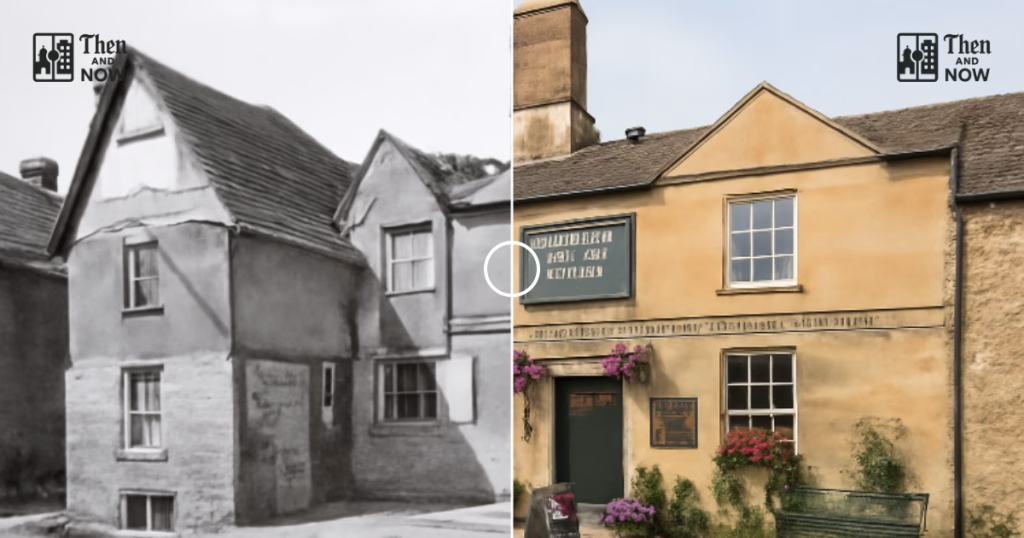
    Then and now comparison: The George Inn 1900 – 2025View interactive comparison →

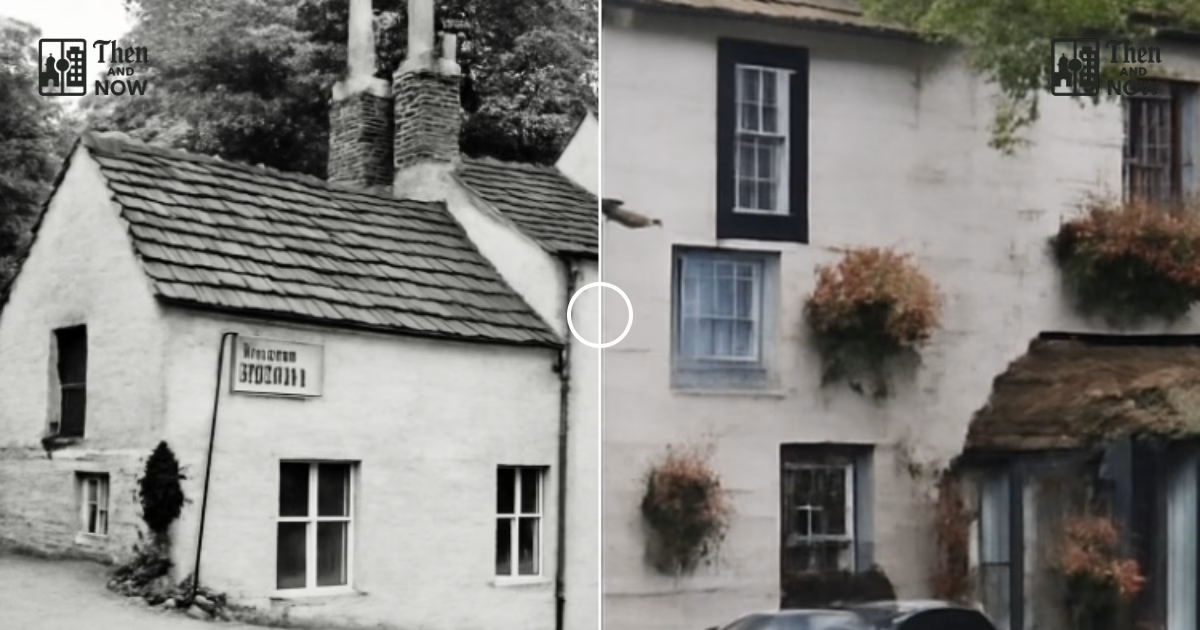
    The George Inn, situated in the picturesque village of Lacock, claims the title of the oldest pub in the area, with origins tracing back to 1361. This historic establishment showcases its medieval roots through its original oak beams and sturdy rubble stone walls, offering a glimpse into the architectural styles of the past.

    Among its notable features is a unique built-in wooden ‘dog wheel,’ which is integrated into the chimney wall. This rare mechanism was once designed to enable a small dog to turn a spit, allowing for meat to roast evenly over an open flame. The inn’s enduring charm and historical significance make it a fascinating landmark for visitors exploring Lacock’s rich heritage.

    (more…)

  • Archbishop’s Palace 1910 – 2025

    Archbishop’s Palace 1910 – 2025

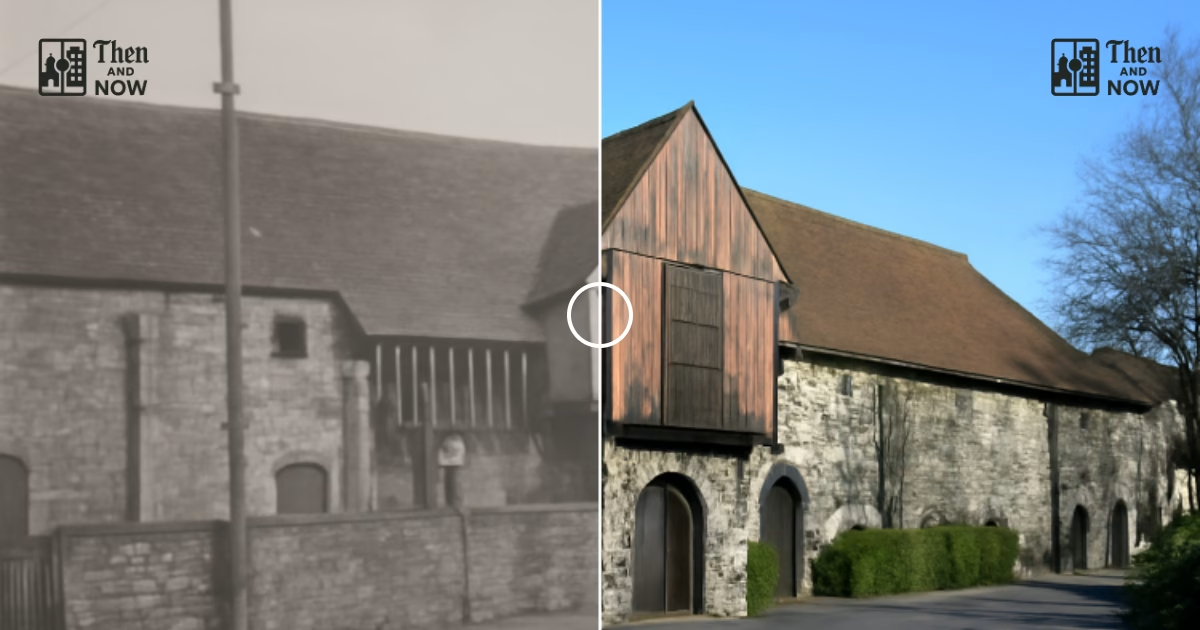
    Then and now comparison: Archbishop’s Palace 1910 – 2025View interactive comparison →

    The Archbishop’s Palace in Maidstone, Kent, boasts a rich history, with its Tithe Barn dating back to the 14th century, commissioned by Archbishop Courtenay. Originally designed to store agricultural tithes, the barn’s robust Kentish ragstone walls reflect its utilitarian past. Following its initial purpose, the structure was repurposed as estate stables before undergoing a significant transformation in 1946, when it became home to Britain’s first carriage museum, established by Sir Garrard Tyrwhitt-Drake.

    Today, this Grade I listed building continues to impress with its medieval features, including buttresses and a timber-framed porch, while showcasing a remarkable collection of horse-drawn vehicles, celebrating its enduring legacy.

    (more…)

  • Naworth Castle, Cumbria 1783 – 2024

    Naworth Castle, Cumbria 1783 – 2024

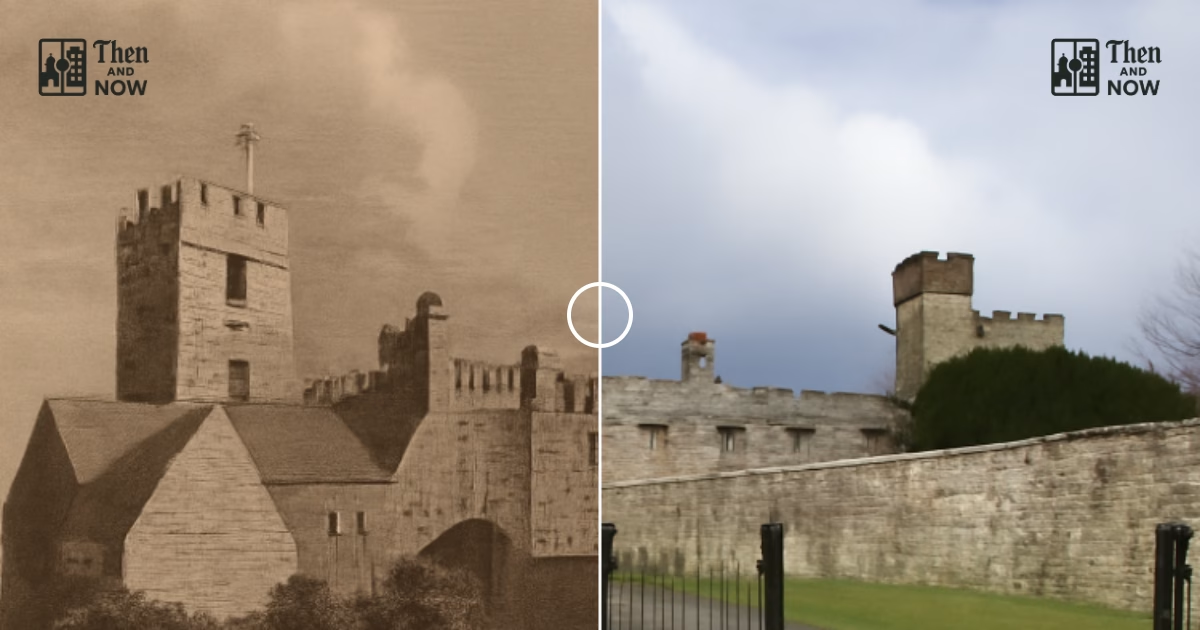
    Then and now comparison: Naworth Castle, Cumbria 1783 – 2024View interactive comparison →

    Naworth Castle, located in Cumbria, was constructed in the early 14th century by Ralph Dacre, primarily to protect against incursions from Scotland. This strategic fortress played a significant role in the region’s defense and underwent significant enhancements in the late 1500s under Lord William Howard, reflecting the evolving needs of its occupants.

    After suffering extensive damage from a fire in 1844, the castle was restored by architect Anthony Salvin, ensuring its preservation for future generations. Today, it stands as the historic residence of the Earls of Carlisle, showcasing the architectural legacy and historical significance of this remarkable structure.

    (more…)

  • Market House 1903 – 2024

    Market House 1903 – 2024

    Then and now comparison: Market House 1903 – 2024View interactive comparison →

    The Red Lion in Wingham has a rich history that traces back to the 13th century, initially serving as the Market House following the establishment of a weekly market by Henry III in 1252. Throughout the English Civil War, it became a significant venue for the local Parliamentary Committee under Oliver Cromwell. By 1680, the building was a focal point for community gatherings, such as the Harvey Charity meetings. For many years, it also functioned as a courthouse where offenders were brought to face the Petty Sessions until the construction of a dedicated sessions house in 1886. After operating as a public house for centuries, the Red Lion closed permanently around 2016, and plans were approved for its redevelopment into a residential property.

    (more…)

  • Mother Shipton Inn, Knaresborough 1900s – 2025

    Mother Shipton Inn, Knaresborough 1900s – 2025

    Then and now comparison: Mother Shipton Inn, Knaresborough 1900s – 2025View interactive comparison →

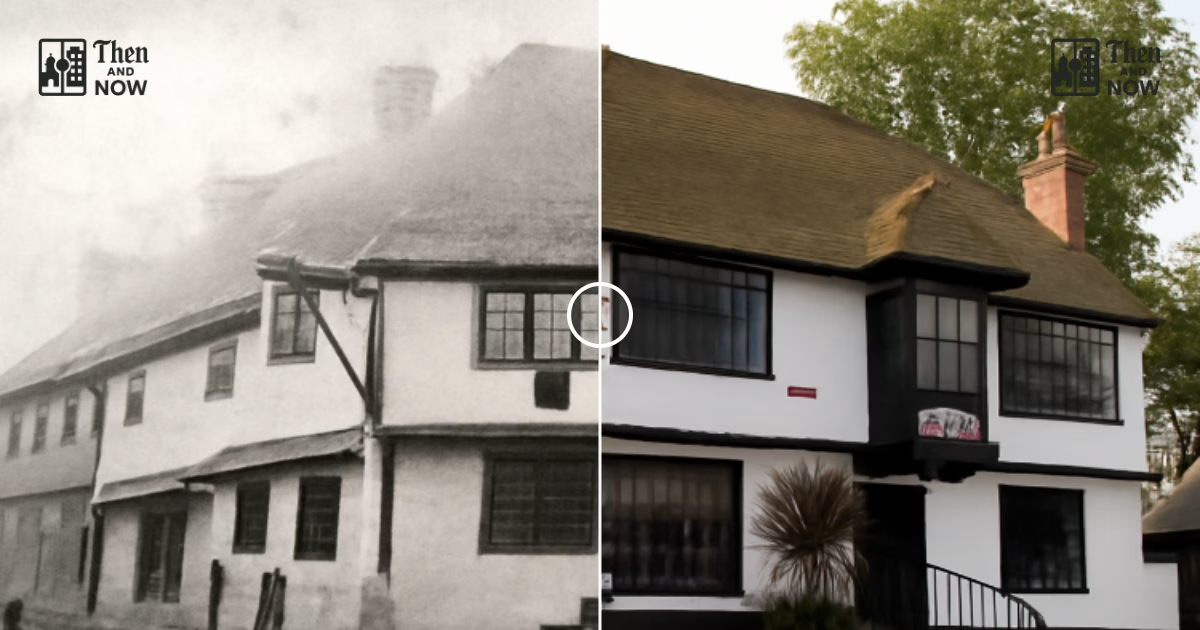
    The Mother Shipton Inn, located in Knaresborough, North Yorkshire, is a notable Grade II listed building that has been a fixture in the area for over six centuries. Originally constructed as a gatehouse, its rich history is intertwined with the legend of Ursula Sontheil, better known as Mother Shipton, a prophetess famed for her predictions, including those concerning significant events in British history.

    Recently, the inn underwent a significant refurbishment costing £250,000, allowing it to continue serving patrons while preserving its historical charm. This establishment not only offers a glimpse into the past but also serves as a reminder of the cultural heritage associated with Mother Shipton and the town of Knaresborough.

    (more…)

  • Gothic St Michael’s Church 1812 – 2024

    Gothic St Michael’s Church 1812 – 2024

    Then and now comparison: Gothic St Michael’s Church 1812 – 2024View interactive comparison →

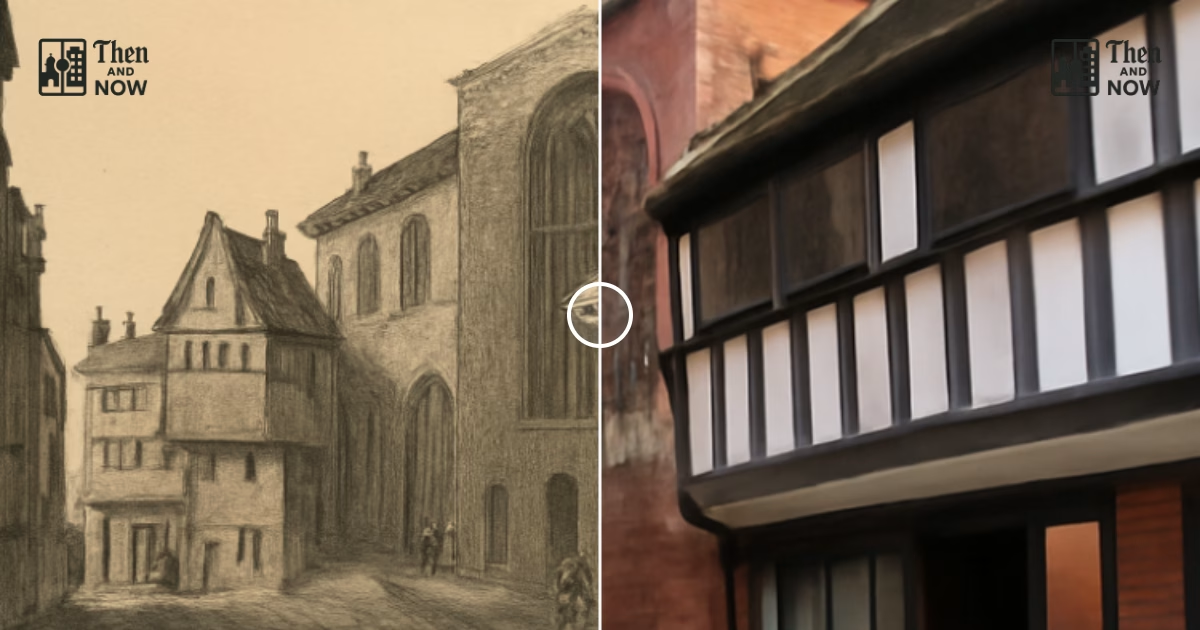
    The first image captures Bayley Lane in Coventry around 1812, showcasing the majestic Gothic St Michael’s Church, which was later designated as a cathedral in 1918. The scene is bustling with life, featuring a variety of timber-framed shops and residences typical of the period.

    In contrast, the contemporary view from 2024 reveals a stark transformation. St Michael’s Church now stands as a roofless ruin, a result of the devastating Blitz bombing in 1940. However, the half-timbered structure to the right has survived and undergone meticulous restoration, reflecting efforts to preserve Coventry’s rich architectural heritage amidst the scars of war.

    (more…)

  • St Catherine’s Chapel, Guildford 1907 – 2026

    St Catherine’s Chapel, Guildford 1907 – 2026

    Then and now comparison: St Catherine’s Chapel, Guildford 1907 – 2026View interactive comparison →

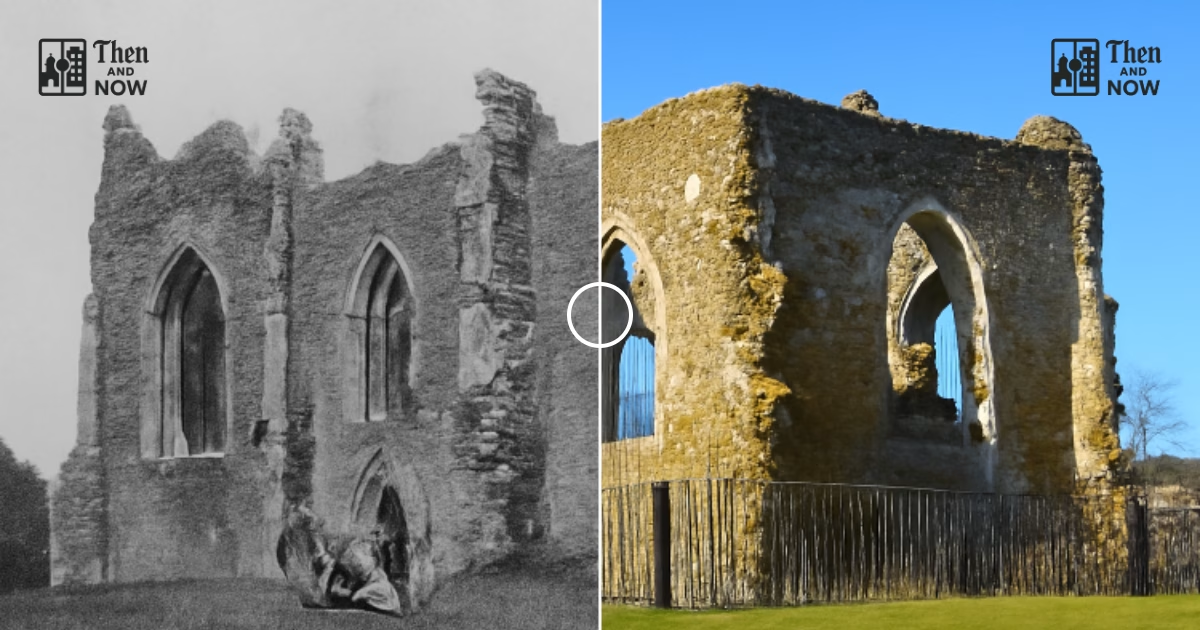
    St Catherine’s Chapel, located in Guildford, stands as a significant historical landmark with roots tracing back to the early 14th century. Established by Richard de Wauncey, the chapel was constructed from local Bargate stone and served as an important stop for pilgrims travelling between Winchester and Canterbury until its decline in the 16th century, a consequence of the English Reformation. The comparison between the early 20th-century photograph featuring three elegantly dressed girls and the present view highlights the enduring presence of this atmospheric Gothic structure. Now a Scheduled Ancient Monument, the chapel continues to evoke interest, having inspired notable artists like J.M.W. Turner. Its preservation allows visitors to appreciate its historical and architectural significance.

    (more…)

  • Flint Castle 1830 – 2025

    Flint Castle 1830 – 2025

    Then and now comparison: Flint Castle 1830 – 2025View interactive comparison →

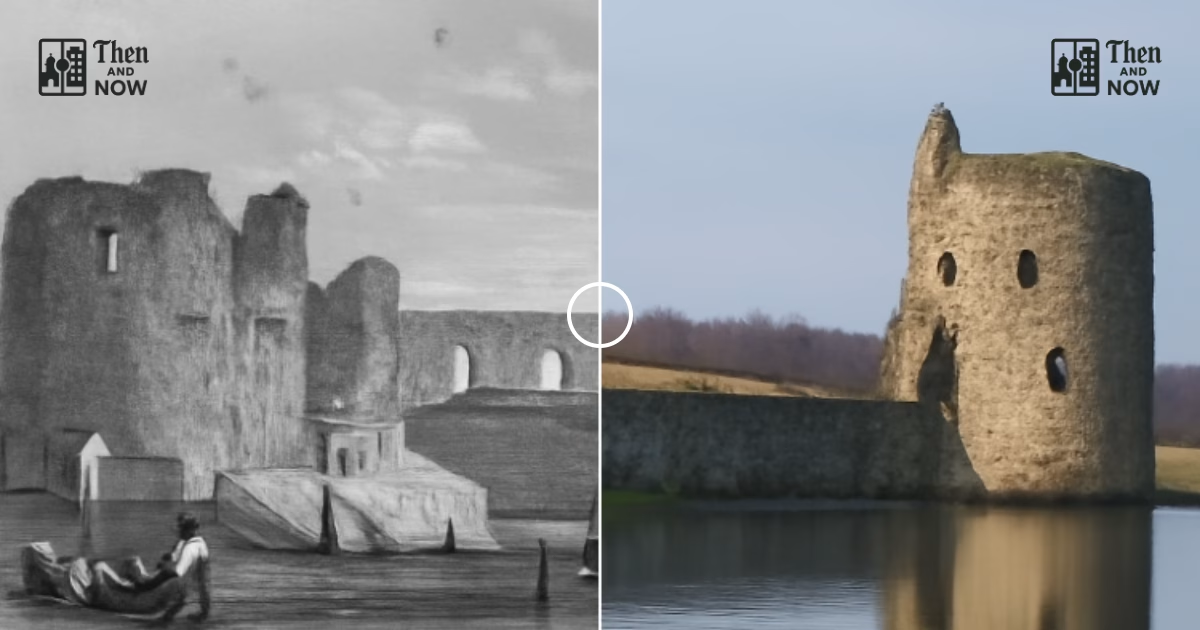
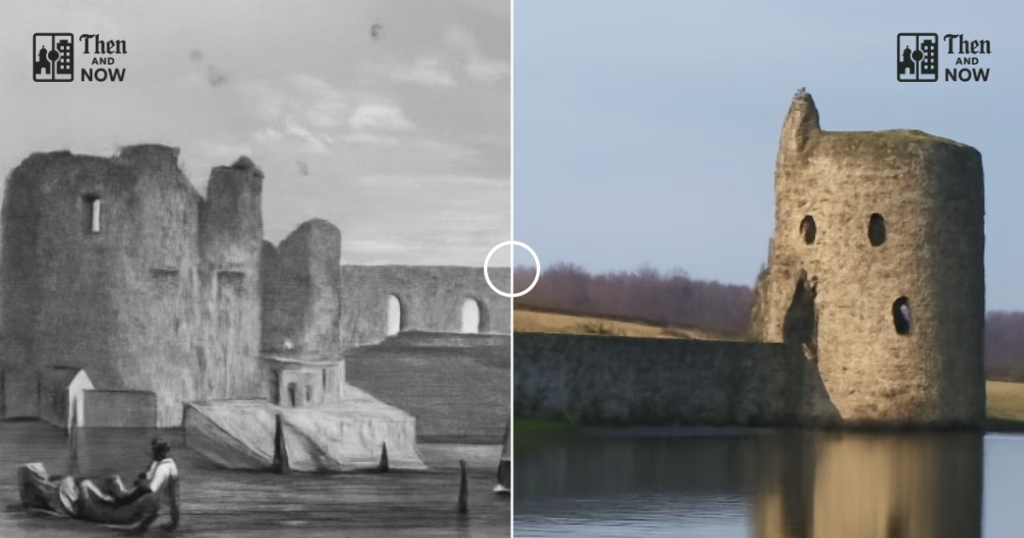
    Flint Castle, situated on the banks of the River Dee estuary in North Wales, was strategically constructed to allow medieval vessels to moor at its formidable stone walls. Originally, the castle enjoyed a coastal position, completely encircled by the sea. Over the centuries, however, the landscape has transformed significantly due to natural sediment deposition and land reclamation efforts, resulting in the castle now being situated further inland.

    Despite these changes, high tides can still encroach upon Flint Castle, momentarily restoring its historic connection to the water. This phenomenon serves as a reminder of the castle’s original maritime surroundings, which have altered dramatically since its establishment, yet still hold echoes of the past.

    (more…)

  • Barle Bridge, Dulverton 1900 – 2026

    Barle Bridge, Dulverton 1900 – 2026

    Then and now comparison: Barle Bridge, Dulverton 1900 – 2026View interactive comparison →

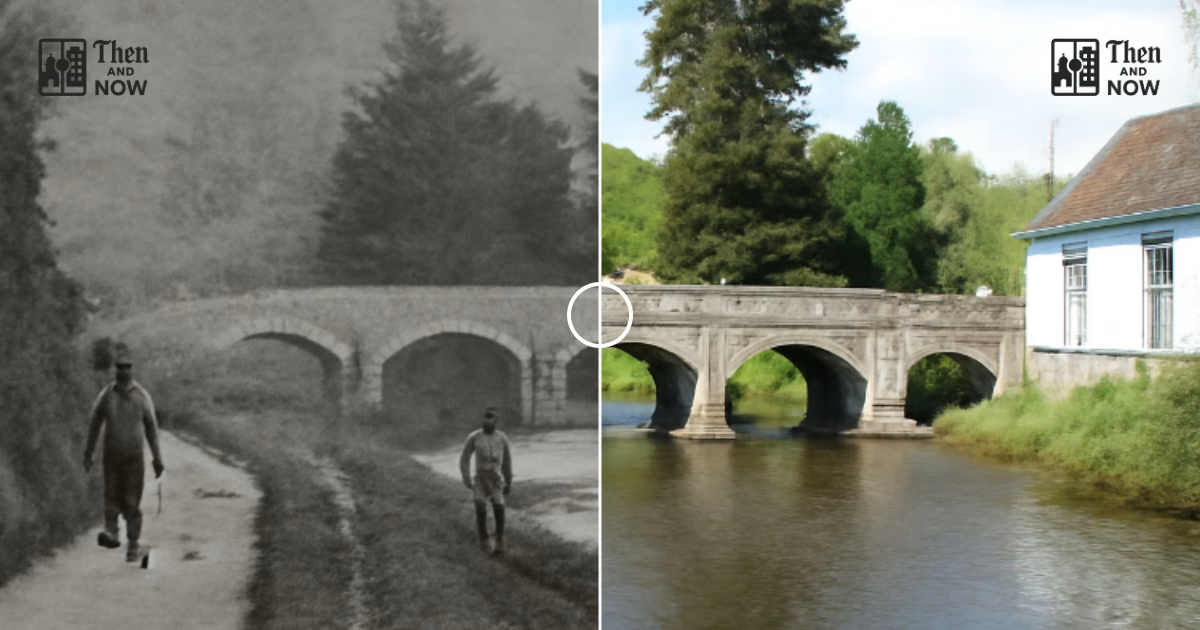
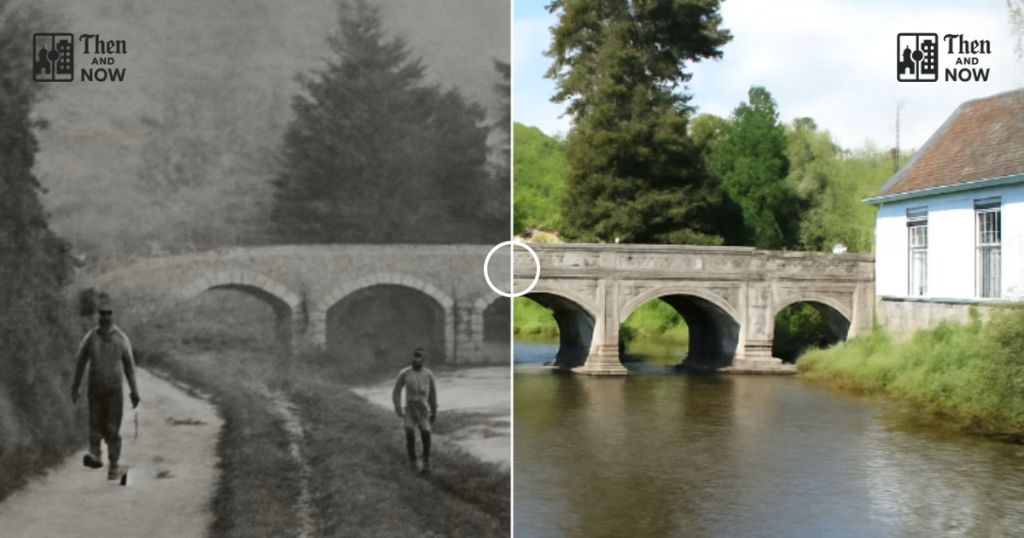
    Barle Bridge, located in Dulverton, Somerset, is a notable five-arch stone structure with medieval origins, recognized as a Grade II listed building. The bridge spans an ancient ford and is first mentioned in municipal records from 1624, following repairs necessitated by flooding. Significant modifications were made in 1819 to accommodate increasing vehicle traffic, led by local builder John Stone.

    Over the years, Barle Bridge has endured various challenges, including substantial repairs after the severe Exmoor floods of 1952/1953 and a notable high-water event in 2012. Today, it stands as a Scheduled Ancient Monument, celebrated for its historical significance and architectural integrity, while continuing to serve as part of the B3222 road in Exmoor National Park.

    (more…)