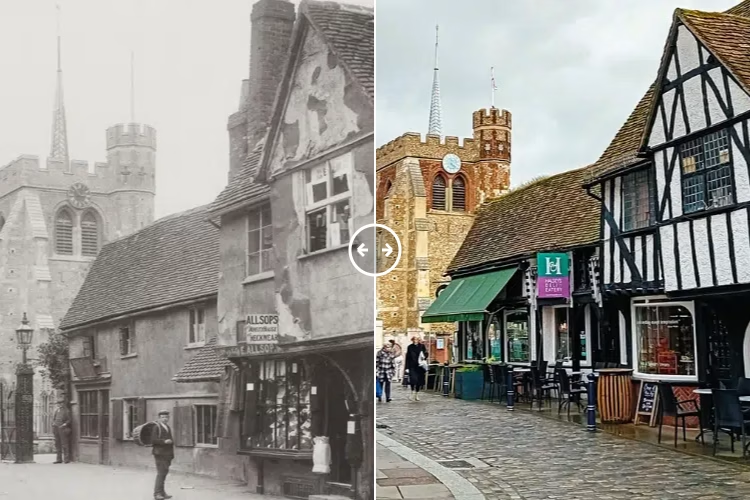
EXPLORE PLACES THROUGH TIME
Hitchin Then & Now
Discover how Hitchin has changed through historic and modern photographs.
A little history of Hitchin
Hitchin, a historic market town in Hertfordshire, England, has been continuously inhabited since at least the 7th century. Its name derives from the Saxon tribe, the Hicce, who settled in the area. The town developed around a market place and the parish church of St Mary, situated on the western banks of the River Hiz. St Mary's Church, the largest parish church in Hertfordshire, predominantly dates from the 14th and 15th centuries, with its tower dating from around 1190.
Historically, Hitchin's economy was rooted in agriculture, serving as a market town for the surrounding arable and sheep farming communities. The cultivation of lavender was significant, with distilleries established to process the crop. The arrival of the Great Northern Railway in 1853 spurred industrial growth, leading to the construction of the Corn Exchange in 1853, an Italianate-style building reflecting the town's prosperity.
Architecturally, Hitchin boasts numerous medieval timber-framed buildings, including the Biggin and William Ransom's House. The town's historic centre, with its market place, Bancroft, Bucklersbury, and Sun Street, retains much of its traditional character. Over the centuries, Hitchin has undergone various developments, balancing preservation with modernisation, and remains a vibrant testament to its rich history.
Explore Hitchin comparisons