EXPLORE PLACES THROUGH TIME
Eastbourne Then & Now
Discover how Eastbourne has changed through historic and modern photographs.
A little history of Eastbourne
Eastbourne, situated on the southern coast of England in East Sussex, boasts a rich history that spans several millennia. The town's name is derived from the Old English term 'Borne,' referring to a stream, with 'East' distinguishing it from other locations named Borne. During the Roman era, the area was inhabited, with evidence of a villa near the present-day seafront. Notably, the 'Beachy Head Woman,' a Roman-era skeleton, was discovered near Beachy Head, dating between 129 and 311 AD. Recent DNA analysis indicates she was of local British origin, challenging earlier assumptions about her ancestry.
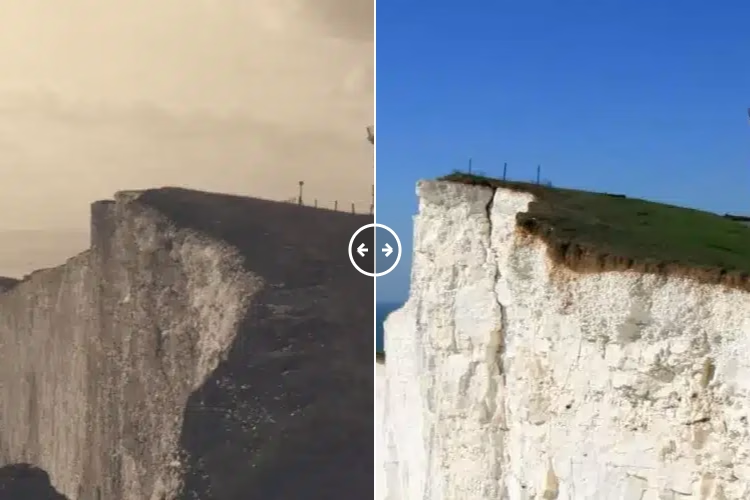
In the medieval period, Eastbourne was a quiet village centered around the Church of St Mary, established in the 12th century. The town's growth accelerated in the 19th century with the arrival of the railway in 1849, transforming it into a fashionable seaside resort. A defining feature of Eastbourne is Beachy Head, the highest chalk sea cliff in Britain, rising to 531 feet (162 meters). To aid navigation, the Belle Tout Lighthouse was constructed in 1834 atop the cliffs. However, due to frequent fog and coastal erosion, it was decommissioned in 1902, and the Beachy Head Lighthouse was built at the base of the cliffs to replace it.
Throughout its history, Eastbourne has been a hub for tourism, culture, and maritime safety, with landmarks like the Belle Tout and Beachy Head Lighthouses symbolizing its enduring legacy.
Explore Eastbourne comparisons