EXPLORE PLACES THROUGH TIME
Dunster Then & Now
Discover how Dunster has changed through historic and modern photographs.
A little history of Dunster
Dunster, Somerset
Dunster, located in Somerset, England, is a historic village renowned for its well-preserved medieval architecture and rich heritage. The village's history dates back to at least the 11th century, as recorded in the Domesday Book, where it was held by William de Mohun. During the medieval period, Dunster thrived as a trading port, known as Dunster Haven, exporting goods such as grain, beans, wool, and wine. However, as the sea retreated, the village shifted its focus to the wool trade, becoming a center for cloth production.
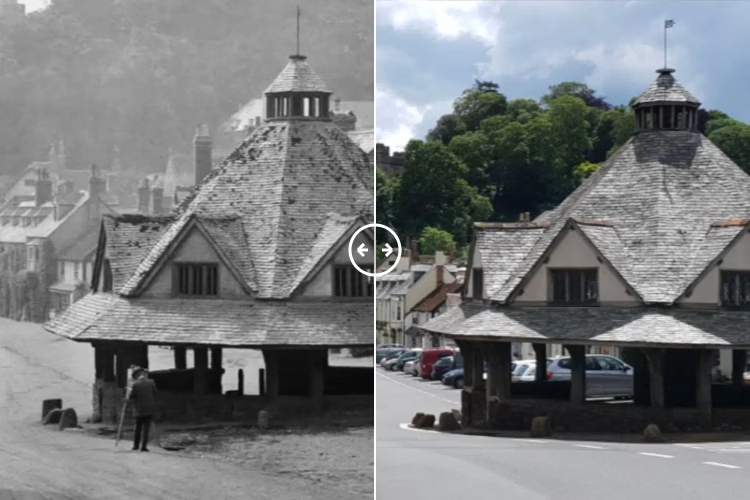
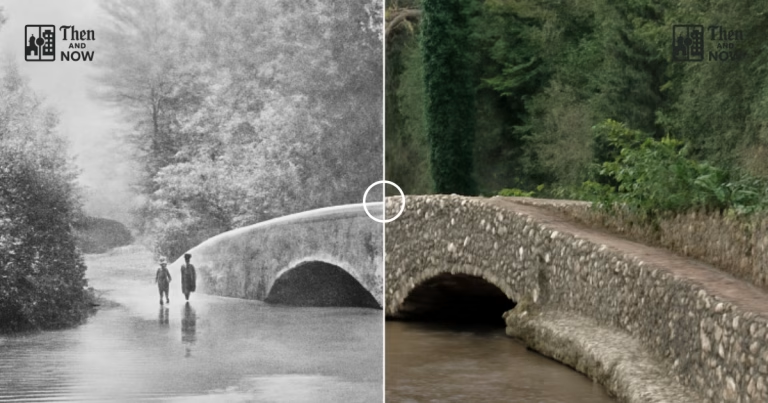
A testament to this prosperous era is the Yarn Market, an octagonal timber building constructed in 1609 to shelter traders and their wares from the weather. This structure stands as a monument to Dunster's wool trading heritage. Another significant landmark is Gallox Bridge, a 15th-century packhorse bridge that once facilitated the transport of wool from Exmoor into the village. This bridge is a Grade I listed building and a scheduled monument, reflecting its historical importance.
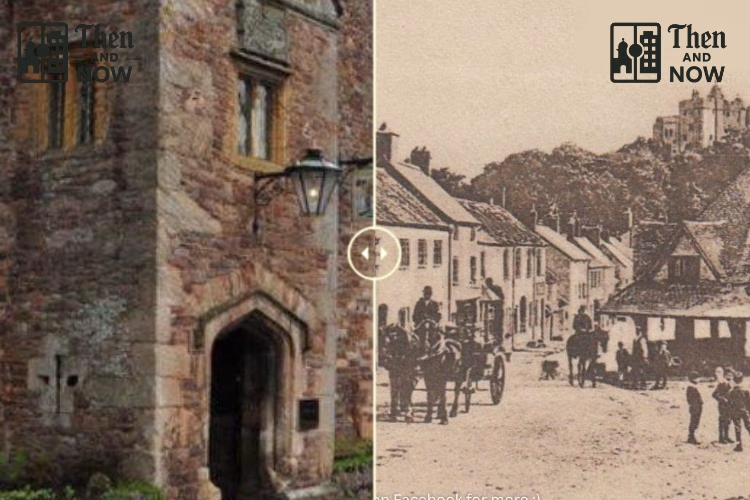
Dominating the village is Dunster Castle, perched atop a steep hill overlooking the settlement. The castle's origins trace back to the 11th century, with significant developments by the Luttrell family, who owned it for over 600 years. The castle has been transformed from a fortress to a family home and is now managed by the National Trust. Dunster's rich history is further evidenced by its over 200 listed buildings, including the Priory Church of St George, which dates mainly from the early 15th century and contains many beautiful features, the finest being a rood-screen which stretches the full width of the building.