EXPLORE PLACES THROUGH TIME
Bibury Then & Now
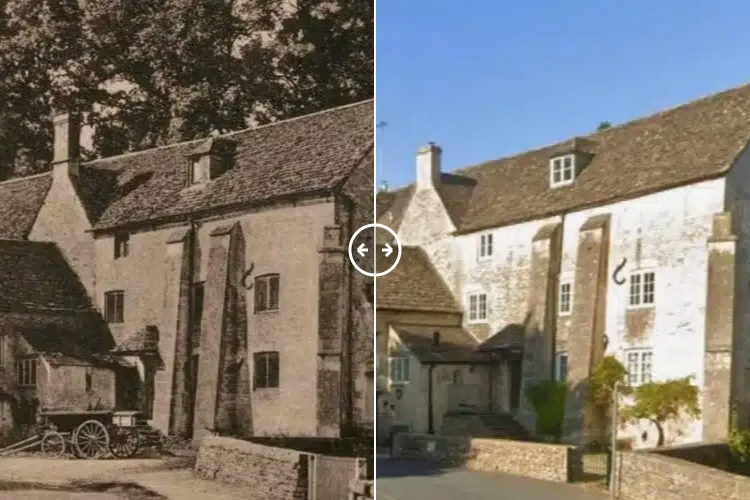
Discover how Bibury has changed through historic and modern photographs.
A little history of Bibury
Bibury, Gloucestershire
Bibury, a village in Gloucestershire, England, has a history spanning over a millennium. First recorded in the Domesday Book of 1086 as Becheberie, it was held by St Mary's Priory in Worcester. The Church of St Mary, with origins in the late Anglo-Saxon period, has been a focal point of the village's development.
The village's prosperity in the medieval era was closely tied to the wool industry. Arlington Row, constructed in 1380 as a monastic wool store, was converted into weavers' cottages in the 17th century. The cloth produced there was sent to Arlington Mill for fulling. Arlington Mill, recorded in the Domesday Book, served as both a corn and wool mill, playing a crucial role in processing the locally produced cloth.
In the 19th century, the village gained national attention when designer and social reformer William Morris described it as "the most beautiful village in England." This recognition highlighted Bibury's enduring charm and its well-preserved historical architecture, which continues to attract visitors today.
Explore Bibury comparisons