EXPLORE PLACES THROUGH TIME
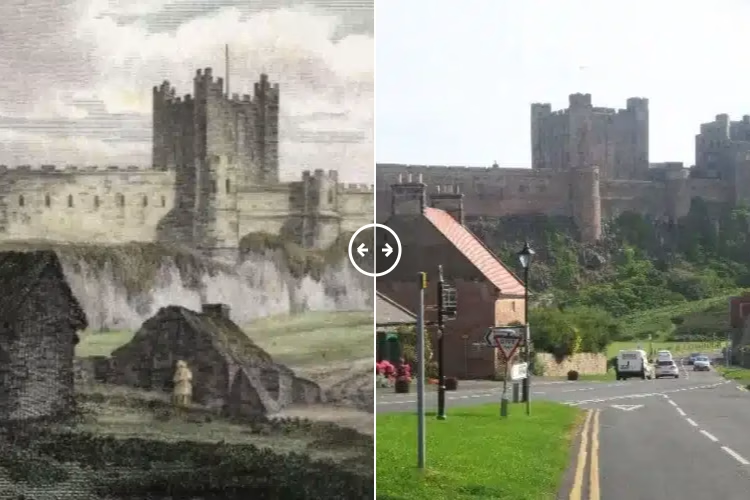
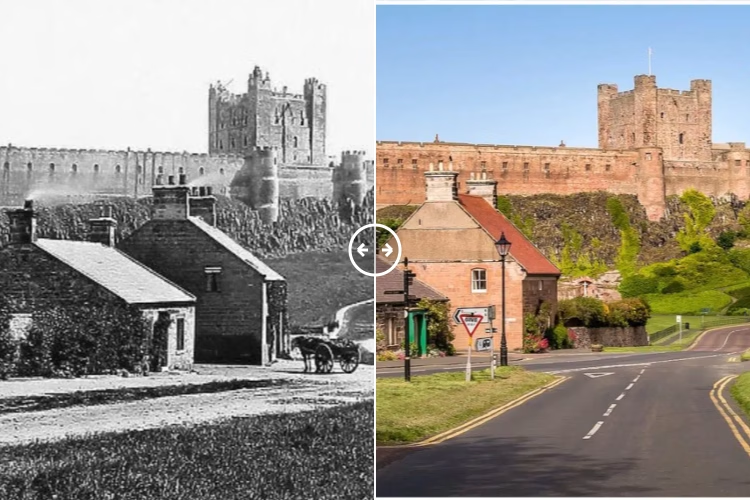
Bamburgh Then & Now
Discover how Bamburgh has changed through historic and modern photographs.
A little history of Bamburgh
Bamburgh, Northumberland
Bamburgh, a coastal village in Northumberland, England, has a rich history dating back to prehistoric times. The site was originally a fort of the Celtic Britons known as Din Guarie and may have been the capital of the kingdom of Bernicia from around 420 until 547. In 547, the Anglo-Saxon ruler Ida of Bernicia captured the citadel, renaming it Bebbanburh, which later evolved into Bamburgh. This stronghold became the royal seat of the Bernician kings and later the earls of Northumbria.
The imposing Bamburgh Castle, built atop a volcanic outcrop, has been a focal point of the village's history. The current structure dates back to the 12th century, with significant restorations in the 18th and 19th centuries. The castle has witnessed numerous sieges, including during the Wars of the Roses, where it became the first English castle to surrender to artillery fire in 1464.
Adjacent to the castle, the Church of St. Aidan stands on the site of a 7th-century church built by St. Aidan himself. The churchyard is the final resting place of Grace Darling, a Victorian heroine renowned for her courageous rescue of shipwrecked sailors in 1838. The village's extensive sandy beach, awarded the Blue Flag in 2005, and the nearby Bamburgh Dunes, a Site of Special Scientific Interest, further highlight the area's natural beauty.