EXPLORE PLACES THROUGH TIME
Ambleside Then & Now
Discover how Ambleside has changed through historic and modern photographs.
A little history of Ambleside
Ambleside, situated at the head of Lake Windermere in Cumbria, England, has a rich history spanning from Roman times to the present. The town's name derives from the Old Norse "Á-mel-sǽtr," meaning "river – sandbank – summer pasture."
In AD 79, the Romans established the fort of Galava on the southern edge of Ambleside, serving as a strategic base for their northern campaigns. By the 17th century, Ambleside had developed into a bustling market town, granted a charter in 1650 to hold markets and cattle fairs, primarily trading in wool and yarn.
The town's industrial growth in the 18th and 19th centuries was marked by the establishment of bobbin mills, utilizing local timber, and the quarrying of slate and stone, which were extensively used in construction. The completion of the turnpike road in 1770 and the arrival of the railway in 1847 spurred tourism, leading to the development of hotels and guesthouses to accommodate visitors.
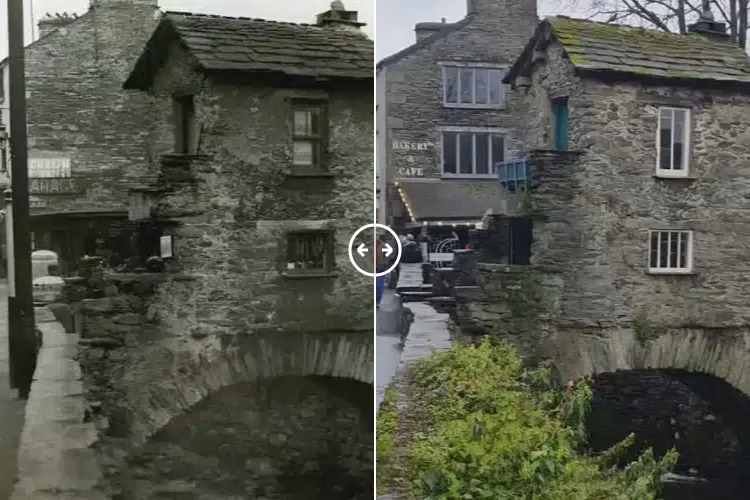
Architecturally, Ambleside boasts several notable buildings, including the 17th-century Bridge House, originally built by the Braithwaite family to access their lands across Stock Ghyll. This iconic structure has served various purposes over the centuries and is now managed by the National Trust. The Armitt Library and Museum, opened in 1912, houses collections representing local artists and writers, reflecting the town's cultural heritage.
Today, Ambleside remains a vibrant town, blending its historical roots with modern amenities, and continues to be a popular destination for tourists and outdoor enthusiasts.
Explore Ambleside comparisons