Author: Jon Hall

  • Llanthony Priory 1920 – 2025

    Llanthony Priory 1920 – 2025

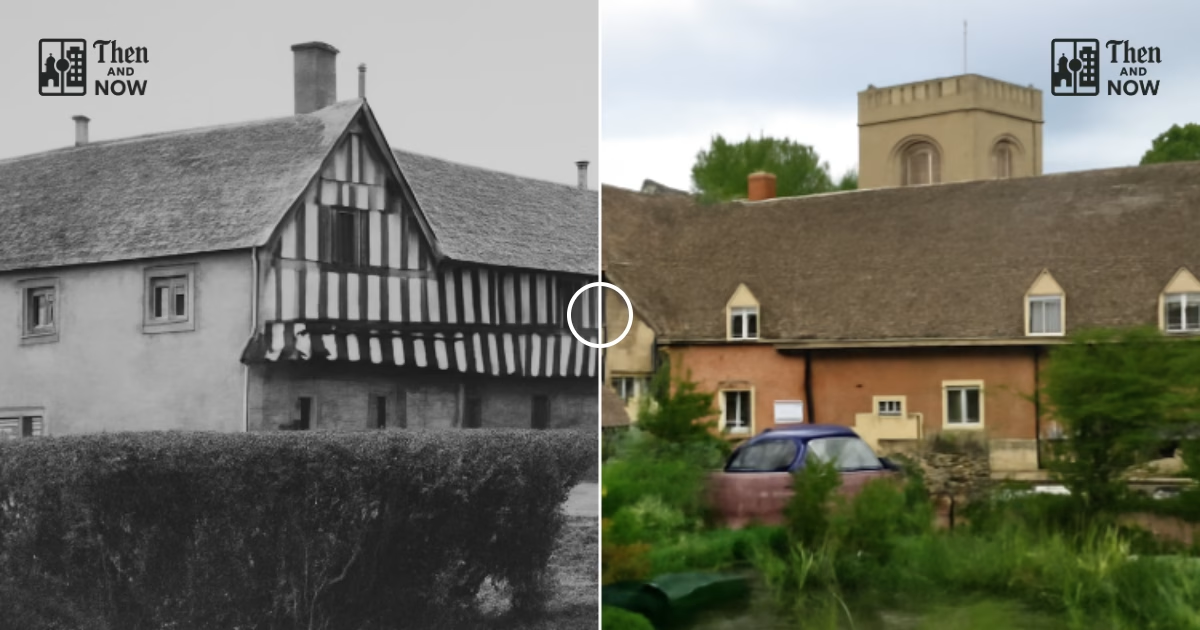
    Then and now comparison: Llanthony Priory 1920 – 2025View interactive comparison →

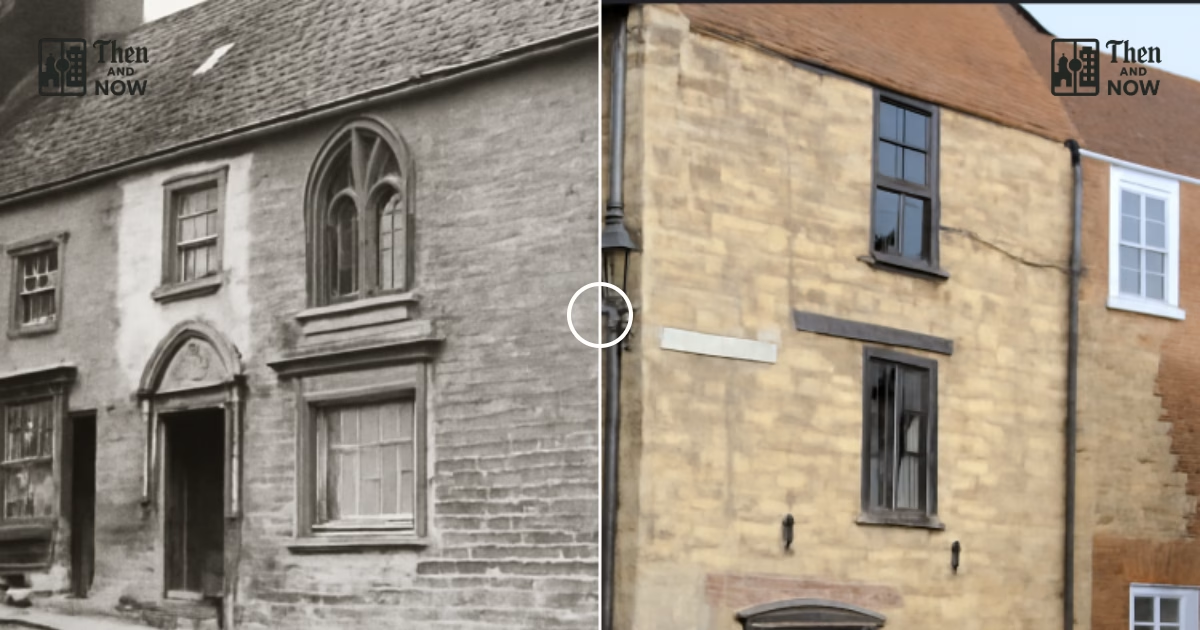
    Llanthony Priory, a site with a rich monastic heritage, has an intriguing connection to Brockworth Court, a Grade II* listed manor house constructed circa 1530. Built by Richard Hart, the last Prior of Llanthony Secunda, this manor served as a peaceful retreat shortly before the upheaval of the Dissolution of the Monasteries under Henry VIII.

    Nestled near the 12th-century Church of St George, Brockworth Court showcases distinct Tudor architectural elements, including a timber-framed upper story and a stone ground floor. The interior is notable for its historic features, such as internal wall paintings, a hidden priest hole, and a depiction of Henry VIII’s coat of arms, recalling the King’s visit with Anne Boleyn in 1535. Since the priory’s dissolution in 1538, the manor has remained within the ownership of prominent families, currently serving as a private residence.
    (more…)

  • Cotehele House 1817 – 2025

    Cotehele House 1817 – 2025

    Then and now comparison: Cotehele House 1817 – 2025View interactive comparison →

    Cotehele House, located in Cornwall, stands as a remarkable example of Tudor architecture, largely built between 1485 and 1520. This well-preserved manor has served as the ancestral home of the Edgcumbe family for nearly six centuries. Sir Richard Edgcumbe was granted the estate in recognition of his support for Henry Tudor during the pivotal Battle of Bosworth.

    Unlike many other historic estates, Cotehele has largely resisted modern alterations, allowing it to maintain its authentic medieval character and original Tudor interiors. The estate’s enduring features provide a unique glimpse into the architectural and familial heritage of the period, making it an important site for understanding English history and craftsmanship.

    (more…)

  • Inchcolm Abbey 1790 – 2024

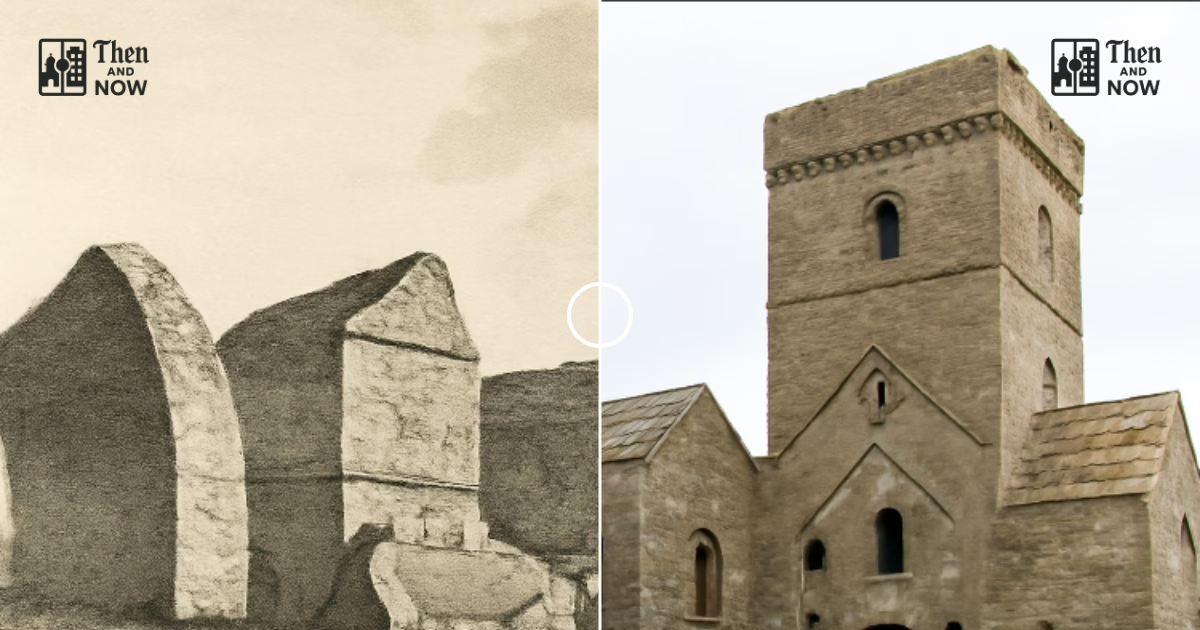
    Inchcolm Abbey 1790 – 2024

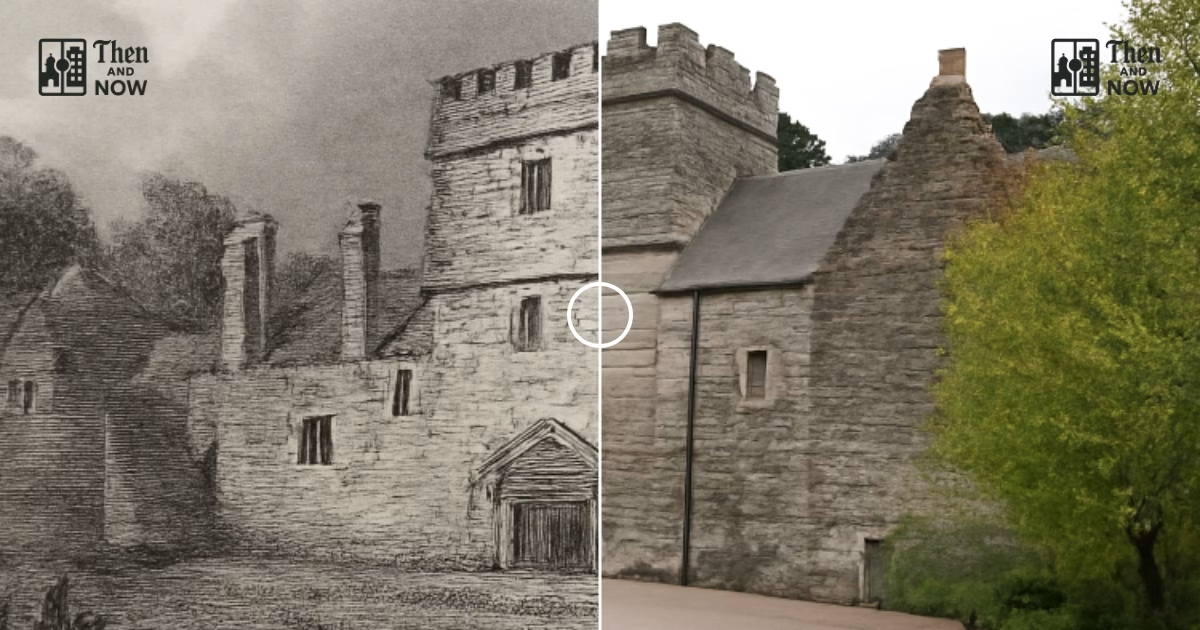
    Then and now comparison: Inchcolm Abbey 1790 – 2024View interactive comparison →

    Inchcolm Abbey, established in the 12th century, is situated on a small island in the Firth of Forth. The site, which fell into disrepair after the Reformation, is depicted in an engraving from 1790, showing its dilapidated state. Recent restoration efforts have revitalised this historic structure, including the reconstruction of the chapter house’s roof and the stabilisation of its belfry tower. Archaeological work has also uncovered medieval foundations and pathways, enhancing visitors’ understanding of the abbey’s historical significance. Today, Inchcolm Abbey stands as a testament to careful preservation, offering a glimpse into its storied past amidst the picturesque island setting.

    (more…)

  • Oxburgh Hall 1914 – 2025

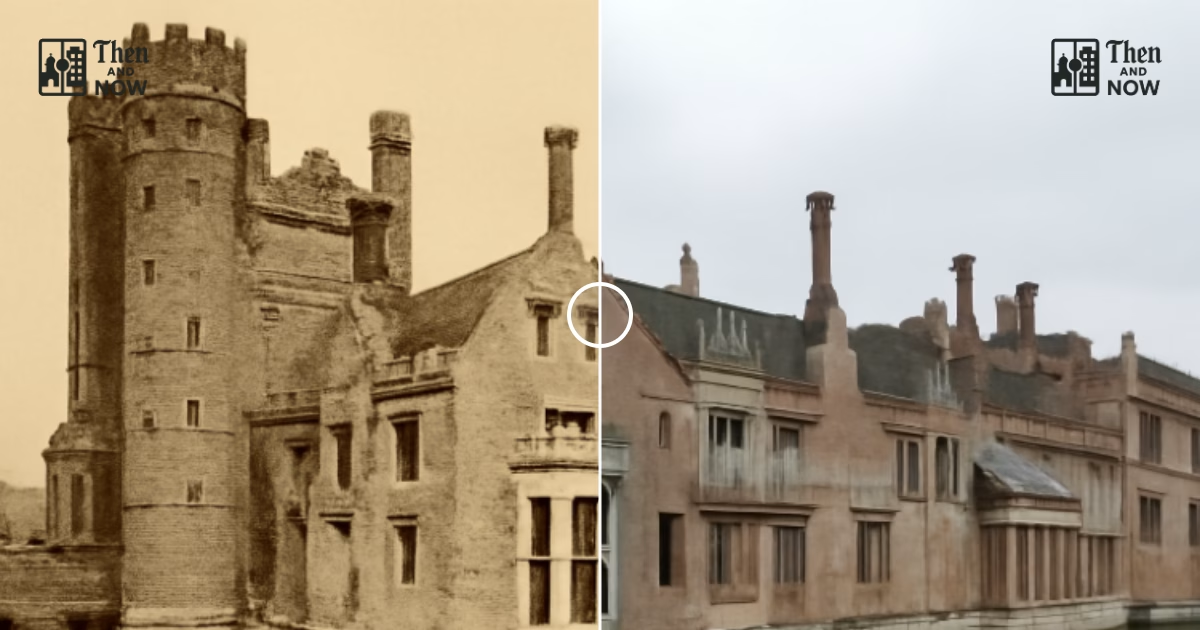
    Oxburgh Hall 1914 – 2025

    Then and now comparison: Oxburgh Hall 1914 – 2025View interactive comparison →

    Oxburgh Hall, a striking moated manor house located in Norfolk, was constructed in 1482 and has been the residence of the Bedingfeld family for over five centuries. This historic site reflects the family’s steadfast Roman Catholic faith, which subjected them to persecution during the Reformation. Notably, the estate features a secret priest hole, a testament to the challenges they faced.

    The building suffered considerable damage during the English Civil War, particularly when Parliamentarian forces set fire to its east wing. In the 19th century, Oxburgh Hall underwent restoration that included Victorian Gothic enhancements. Recognized for its historical significance, the property was saved from demolition in 1951 and is currently under the stewardship of the National Trust, housing unique items such as the Marian Hangings associated with Mary, Queen of Scots.

    (more…)

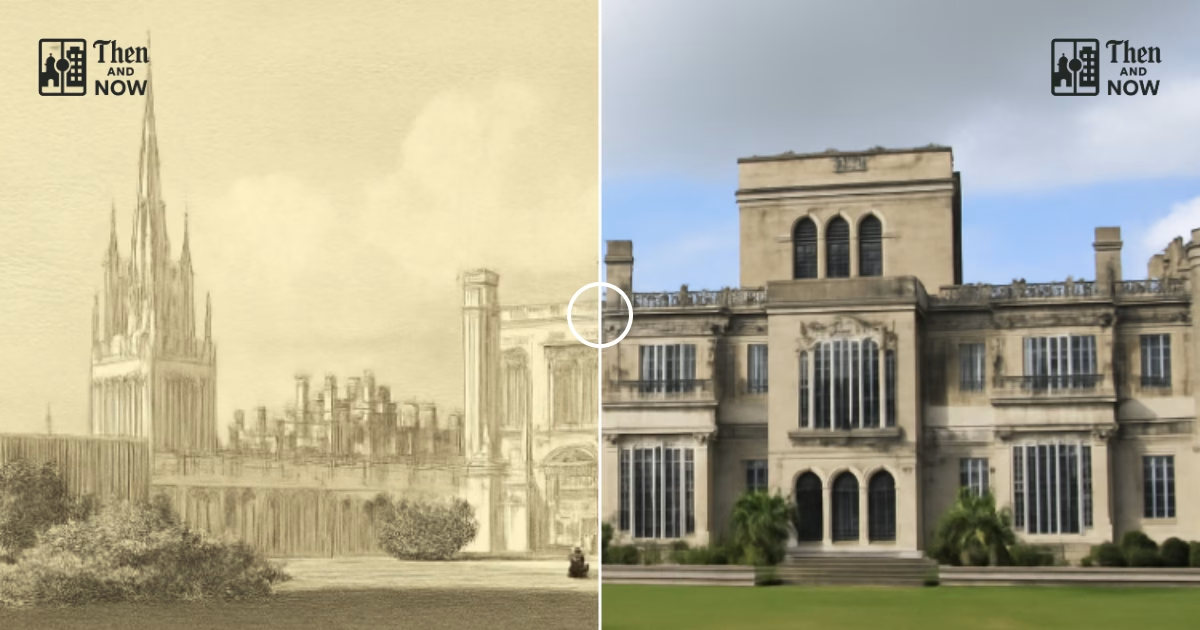
  • Ashridge House 1824 – 2024

    Ashridge House 1824 – 2024

    Then and now comparison: Ashridge House 1824 – 2024View interactive comparison →

    Ashridge House has a rich history that traces back to its establishment as a monastery in 1283. Over the centuries, it transitioned from a religious site to a royal estate during the reigns of Henry VIII and Queen Elizabeth I. In the early 19th century, the original structures were replaced with a grand Gothic Revival mansion, reflecting the architectural styles of that era.

    In modern times, Ashridge House has served various purposes, including a military hospital during World War II and later as a private college. Currently, it operates as an executive business school, with its extensive grounds maintained by the National Trust, ensuring the preservation of its historical significance and natural beauty.

    (more…)

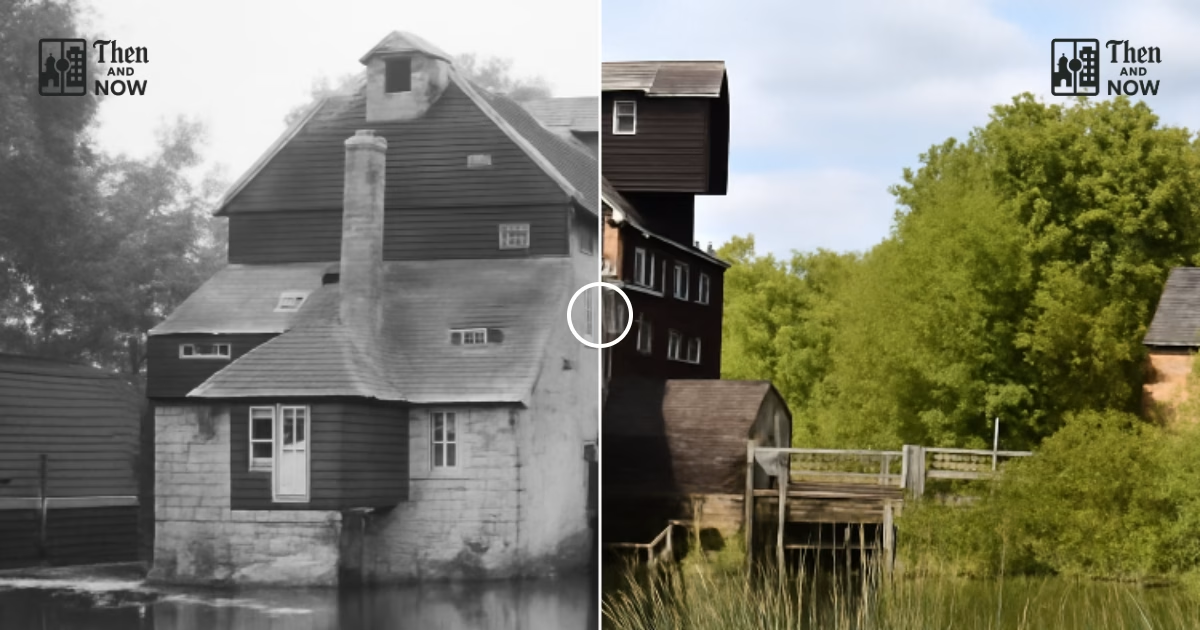
  • Houghton Mill 1902 – 2024

    Houghton Mill 1902 – 2024

    Then and now comparison: Houghton Mill 1902 – 2024View interactive comparison →

    Houghton Mill has a rich history as a milling site, with origins tracing back to the 10th century. The existing timber-framed building, constructed circa 1793, served as a vital commercial mill until its closure in 1930. Recognizing its historical value, local residents rallied to preserve the mill, leading to its donation to the National Trust in 1935. Today, this meticulously restored structure is celebrated as the last fully operational watermill on the river, continuing to attract visitors keen to explore its heritage and the traditional milling processes that once played a significant role in the local economy.

    (more…)

  • Norman House 1929 – 2025

    Norman House 1929 – 2025

    Then and now comparison: Norman House 1929 – 2025View interactive comparison →

    Norman House, situated on Lincoln’s Steep Hill, is one of the oldest domestic structures still standing in the UK, with its origins dating back to the late 12th century. Constructed between 1170 and 1180, this Grade I listed building initially served as a prestigious residence as well as a secure storage space for a prosperous merchant of the medieval period.

    Remarkably, Norman House has withstood various historical events, including the 1217 Battle of Lincoln and the tumultuous periods of the English Civil War and both World Wars. In contemporary times, this historic site has been revitalised as an independent tea and coffee shop, providing a unique space where visitors can enjoy refreshments steeped in centuries of history.

    (more…)

  • Stourhead House 1813 – 2024

    Stourhead House 1813 – 2024

    Then and now comparison: Stourhead House 1813 – 2024View interactive comparison →

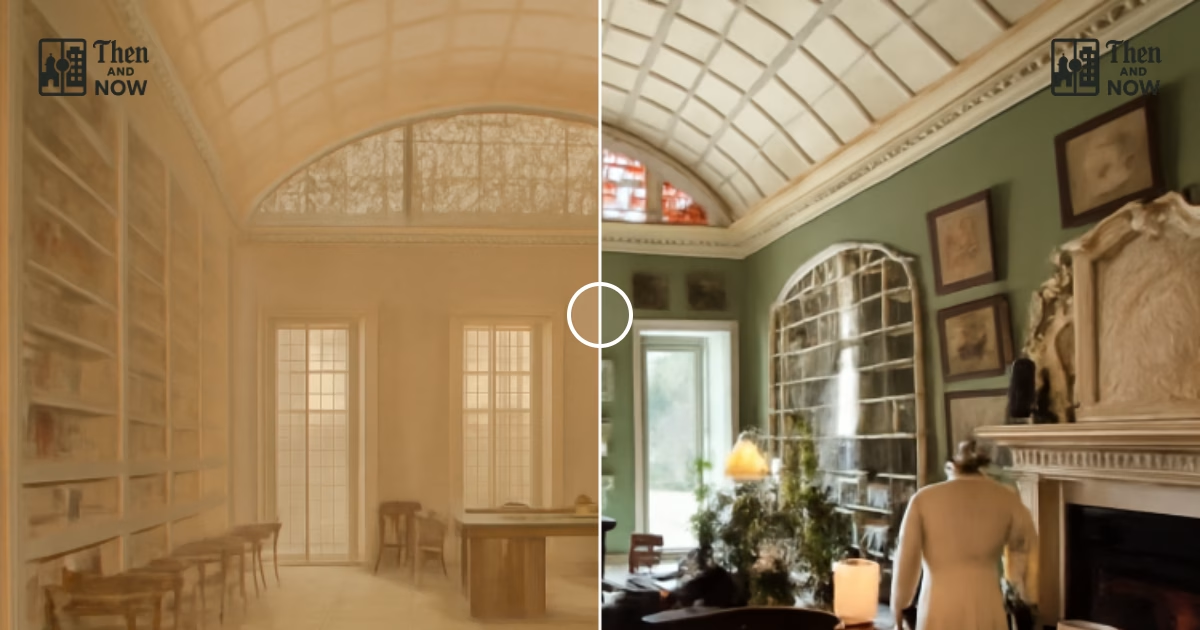
    Stourhead House features a remarkable library that was constructed between 1796 and 1800 under the direction of Sir Richard Colt Hoare, a notable antiquarian. Designed by architect Sir Richard Westmacott, this Neo-Classical wing was intended to showcase Hoare’s extensive collection of books, manuscripts, and treasures acquired during his Grand Tours.

    The library is adorned with custom furniture crafted by Thomas Chippendale the Younger and includes an exquisite painted glass window from 1803, illustrating Raphael’s The School of Athens. Remarkably, this self-contained wing survived a catastrophic fire in 1902 that ravaged the main house, allowing its original Regency interiors to remain preserved. In 1946, Stourhead House and its library were entrusted to the National Trust for future generations to appreciate.

    (more…)

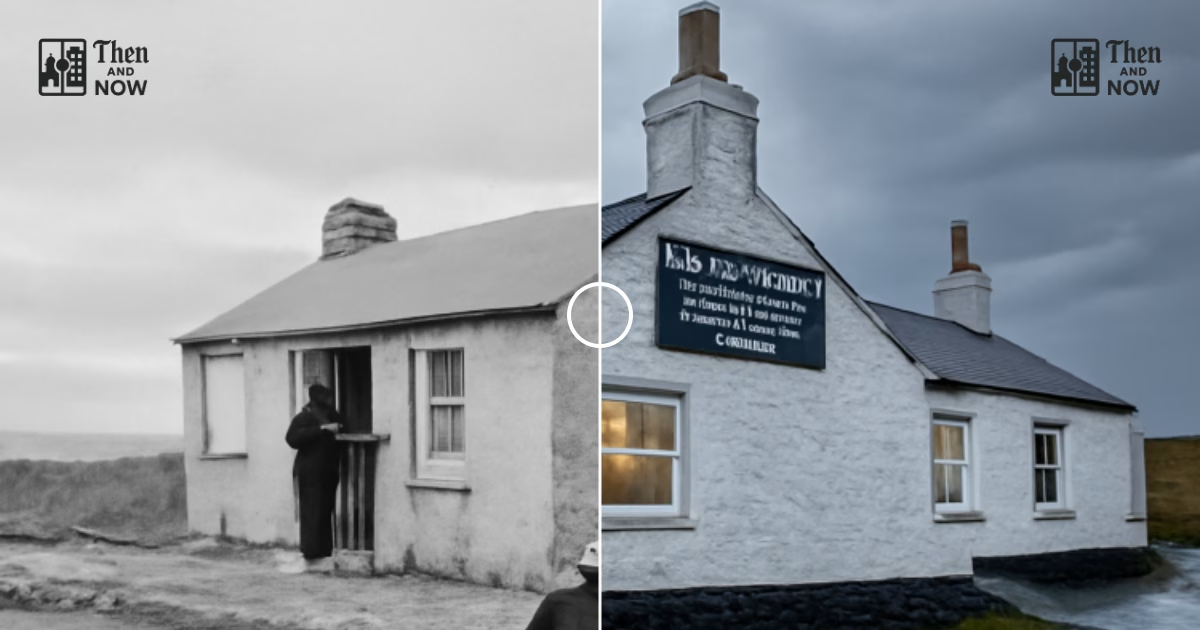
  • Last House, Land’s End 1907 – 2026

    Last House, Land’s End 1907 – 2026

    Then and now comparison: Last House, Land’s End 1907 – 2026View interactive comparison →

    The Last House at Land’s End, located at the most westerly point of mainland Britain, has a rich history dating back to the 1860s. Originally constructed as a modest dwelling, it underwent substantial renovations during the 20th century to cater to the increasing number of visitors drawn to this iconic location.

    While the front of the building retains its traditional granite facade, reflective of its late 19th-century origins, the structure has been significantly extended at the rear. These expansions have transformed it into a bustling retail space, now home to a gift shop and an ice cream parlour, illustrating the evolving nature of tourism in this picturesque setting.

    (more…)

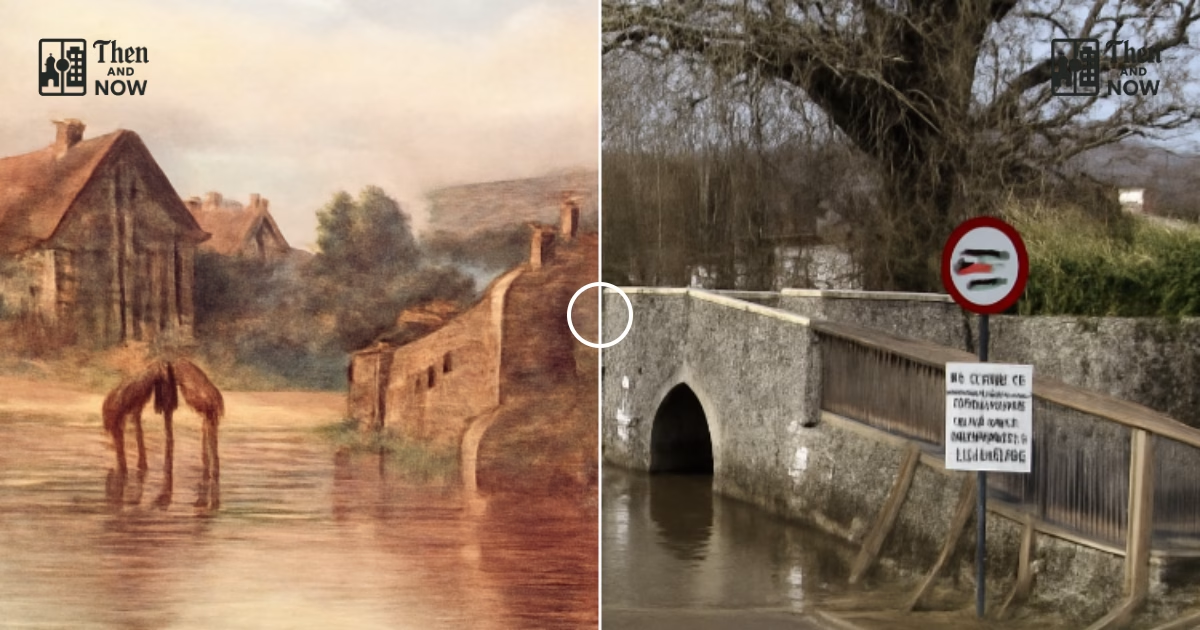
  • St Martin’s Church 1909 – 2025

    St Martin’s Church 1909 – 2025

    Then and now comparison: St Martin’s Church 1909 – 2025View interactive comparison →

    St Martin’s Church stands as a prominent feature in the historic village of Eynsford, situated in the picturesque Darent Valley of Kent. The village’s origins are closely tied to its crossing over the River Darent, which has played a vital role in its development. Notably, the area also boasts a 17th-century packhorse bridge, highlighting the long-standing importance of trade and transport in this region. Additionally, remnants of an 11th-century Norman castle add to the historical significance of Eynsford, offering a glimpse into the village’s medieval past and architectural evolution over the centuries.

    (more…)