EXPLORE PLACES THROUGH TIME
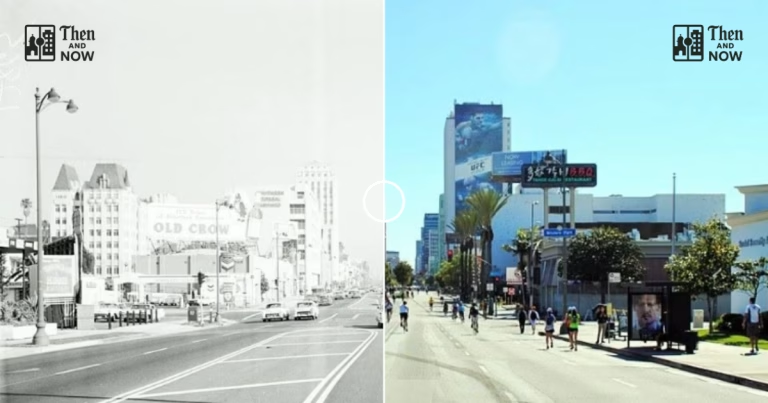
Wilshire Boulevard Then & Now
Discover how Wilshire Boulevard has changed through historic and modern photographs.
A little history of Wilshire Boulevard
Wilshire Boulevard, Los Angeles
Wilshire Boulevard, a prominent east-west thoroughfare in Los Angeles, California, has evolved from indigenous pathways to a bustling urban artery. Originally, the Tongva people utilized this route to transport tar from the La Brea Tar Pits to their coastal settlements. Following Spanish colonization, it became known as "El Camino Viejo" and traversed the original pueblo of Los Angeles.
In 1895, developer Henry Gaylord Wilshire donated land to the city for a boulevard extending westward from Westlake Park (now MacArthur Park). He stipulated that the boulevard be named in his honor and that it prohibit railroad lines and commercial trucking. This donation led to the boulevard's formal establishment, connecting various parts of the city.
Throughout the 20th century, Wilshire Boulevard became a hub for commerce and culture. In the 1920s, the area known as the Miracle Mile emerged, featuring Art Deco landmarks and department stores like Bullock's. The boulevard also saw the construction of significant buildings such as the Ambassador Hotel and the Wilshire Boulevard Temple, reflecting its architectural and social importance.
Today, Wilshire Boulevard continues to be a vital part of Los Angeles, showcasing a blend of historical significance and modern development.
Explore Wilshire Boulevard comparisons