EXPLORE PLACES THROUGH TIME
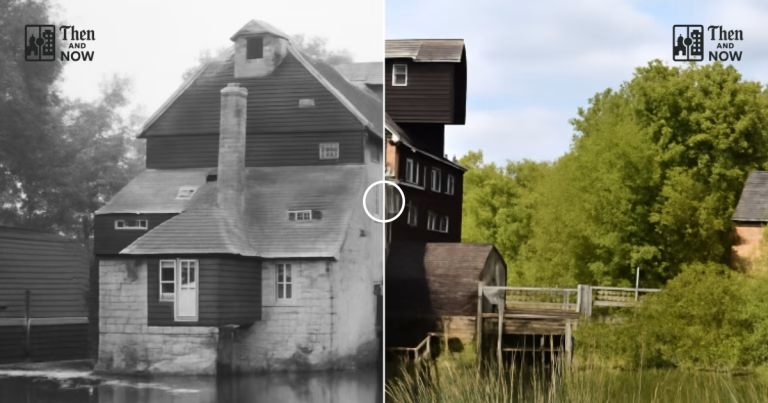
Houghton, Cambridgeshire, England Then & Now
Discover how Houghton, Cambridgeshire, England has changed through historic and modern photographs.
A little history of Houghton, Cambridgeshire, England
Houghton, Cambridgeshire, is a village with a rich history, notably marked by the presence of Houghton Mill, a watermill situated on the River Great Ouse. The current mill structure, likely built in the 17th century, replaced an earlier building destroyed by fire. In the 19th century, the mill was expanded to meet the growing demand for flour, operating ten pairs of grinding stones powered by three waterwheels. However, by the 1920s, milling ceased, and the mill fell into disrepair. In the 1930s, local residents purchased the building, and it was subsequently managed by the National Trust. During World War II, the mill served as a youth hostel, and in 1999, a new waterwheel was installed, restoring its milling function.
The village's origins trace back to the 7th century, with archaeological findings indicating early settlements. The name "Houghton" derives from Old English, combining "hoh" (a heel or projection of land) and "tun" (a farmstead or settlement). In 1934, Houghton and the neighbouring village of Wyton were merged to form the civil parish of Houghton and Wyton.
Today, Houghton retains its rural charm, with the mill serving as a focal point of its historical heritage.
Explore Houghton, Cambridgeshire, England comparisons