EXPLORE PLACES THROUGH TIME
Holborn Then & Now
Discover how Holborn has changed through historic and modern photographs.
A little history of Holborn
Holborn, situated in central London, has evolved from a Roman road to a bustling commercial and legal district. Its name, derived from Old English "hol" (hollow) and "burne" (stream), reflects its origins along the valley of the River Fleet.
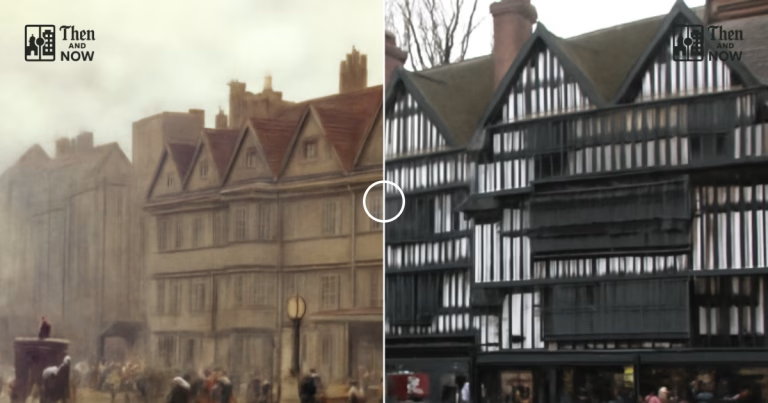
In the 12th century, Holborn began to develop westward beyond the City Wall, becoming London's original West End. The area was associated with the legal profession, housing several Inns of Court and Inns of Chancery, including the last surviving Inn of Chancery, Staple Inn. Established in 1585, Staple Inn is a Tudor building that survived the Great Fire of London and was designated a Grade I listed building in 1974.
The 19th century saw significant urban growth, with the construction of the Holborn Viaduct in 1869, an ornate iron bridge that improved access between Holborn and the City of London. The area also became a hub for the entertainment industry, featuring theatres, restaurants, and pubs. Notably, the Holborn Theatre, opened in 1867, operated as an equestrian ring and theatre until 1886.
Despite extensive damage during World War II, Holborn's historic character has been preserved through careful restoration, maintaining its status as a vibrant and diverse part of London.
Explore Holborn comparisons