EXPLORE PLACES THROUGH TIME
Hassop, Derbyshire Then & Now
Discover how Hassop, Derbyshire has changed through historic and modern photographs.
A little history of Hassop, Derbyshire
Hassop, Derbyshire
Hassop, a village in Derbyshire, England, has a rich history dating back to the Domesday Book of 1086, where it was recorded as a manor held by King William. The settlement was assessed at 23 hides for tax, with land for 22 ploughs, 9 plough teams at work, 18 villagers, 40 acres of meadow, and 2 * 2 leagues of woodland.
In the 17th century, the Eyre family of Padley became prominent landowners, constructing Hassop Hall. During the English Civil War in 1643, the Hall was garrisoned by Royalist forces. The Hall underwent significant rebuilding in the Classical style between 1827 and 1833.
The Church of All Saints, built between 1816 and 1818 for the Eyre family, is a notable Grade I listed building.
Hassop developed around several lead mines, including "The Brightside," "Backdale," "Harry Bruce," "Waterhole," and "Whitecoe," which operated until the mid-19th century.
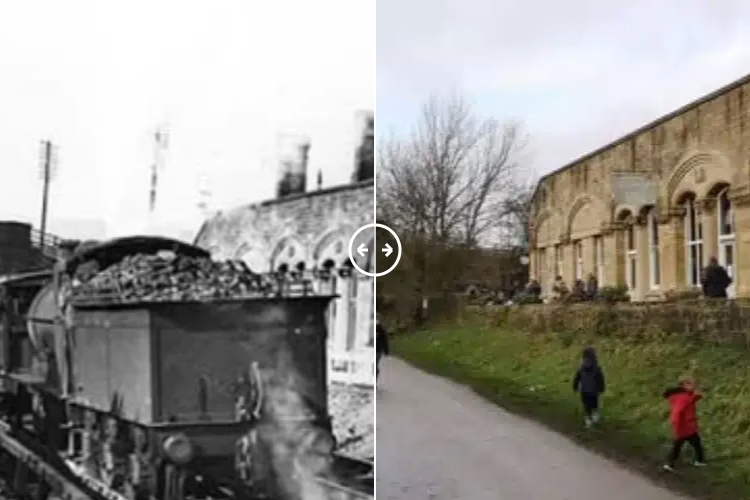
The village was served by Hassop railway station, opened in 1862 by the Midland Railway. Renamed Hassop for Chatsworth, it closed to passengers in 1942 and to goods in 1964. The station building has since been converted into a bookshop and café, and the former trackbed is now part of the Monsal Trail, a popular walking and cycling route.
Today, Hassop retains its historical charm, with landmarks such as Hassop Hall and the Church of All Saints, reflecting its rich heritage and architectural significance.
Explore Hassop, Derbyshire comparisons