EXPLORE PLACES THROUGH TIME
Coventry Then & Now
Discover how Coventry has changed through historic and modern photographs.
A little history of Coventry
Coventry, located in the West Midlands of England, has a rich history marked by resilience and transformation. The city's origins trace back to around AD 700, when St Osburga established a convent beside the River Sherbourne, leading to the settlement's growth. In 1043, Leofric, Earl of Mercia, and his wife Godiva founded a Benedictine monastery dedicated to St Mary, which became a cathedral in 1095. This cathedral was destroyed during the Reformation in 1539.
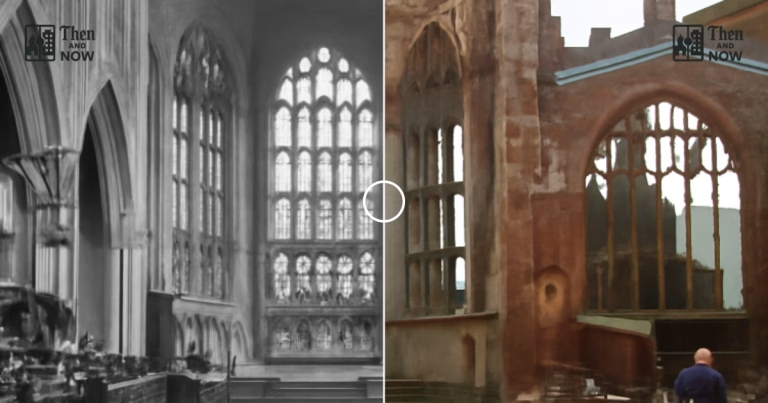
The 14th-century parish church of St Michael was elevated to cathedral status in 1918, becoming the second cathedral of Coventry. During World War II, on 14 November 1940, the Luftwaffe's bombing raids devastated the city, including the cathedral. Remarkably, the tower and spire survived, standing at 284 feet. In the aftermath, Provost Richard Howard chose not to rebuild the old cathedral but to construct a new one alongside the ruins, symbolizing hope and reconciliation. The new Cathedral Church of Saint Michael, designed by Sir Basil Spence, was consecrated in 1962.
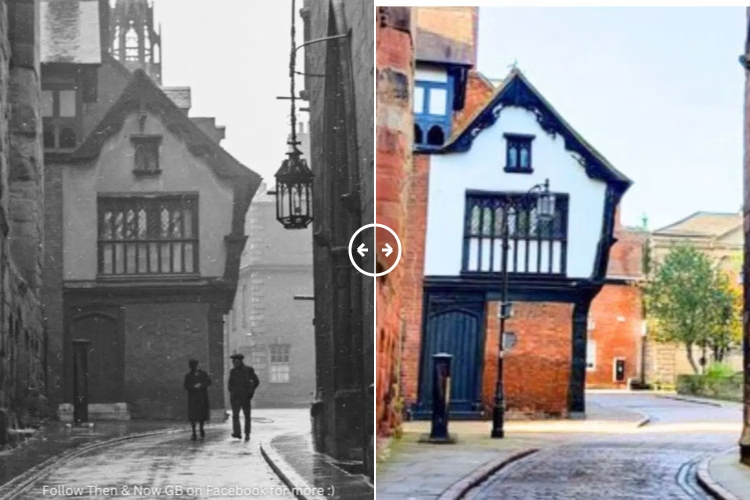
Bayley Lane, a historic street in Coventry's Cathedral Quarter, has been a focal point since medieval times. It is believed to follow the line of the outer ditch or bailey of the former Coventry Castle, founded by the Earls of Chester between 1088 and 1147. The lane features several notable buildings, including St Mary's Guildhall, which occupies the same site as the first hall constructed for the Guild of St Mary in 1340. The current structure, primarily from the 14th and 15th centuries, has been a significant venue for civic events and gatherings.
These landmarks reflect Coventry's enduring spirit and its journey through periods of destruction and renewal.