EXPLORE PLACES THROUGH TIME
Conwy Then & Now
Discover how Conwy has changed through historic and modern photographs.
A little history of Conwy
Aberconwy House
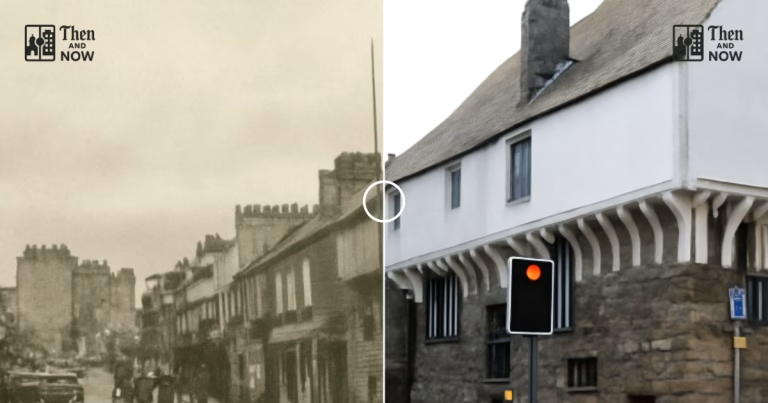
Conwy, a historic town in North Wales, is renowned for its well-preserved medieval architecture, notably Conwy Castle and the town walls, both constructed between 1283 and 1289 under Edward I's orders. These fortifications were part of a strategic plan to establish English dominance in the region. Within the town, Aberconwy House stands out as the oldest surviving secular building in Wales, dating back to the early 15th century. Built around 1420, this timber-framed merchant's house reflects the town's commercial significance during the medieval period. Its unique architectural features, such as the projecting upper storey, are characteristic of the era. Over the centuries, Aberconwy House has served various purposes, including as a temperance hotel in the 19th century. Today, it operates as a museum, offering insights into Conwy's rich history.
The town's strategic location along the Conwy estuary has been pivotal throughout its history. In the 19th century, the construction of Thomas Telford's suspension bridge in 1826 and Robert Stephenson's tubular railway bridge in 1848 enhanced Conwy's connectivity, facilitating trade and tourism. These developments spurred economic growth and solidified Conwy's status as a key commercial hub in North Wales. The town's rich history and well-preserved architecture have earned it a place as a UNESCO World Heritage Site, recognized for its exceptional medieval military architecture and urban planning.
Explore Conwy comparisons