EXPLORE PLACES THROUGH TIME
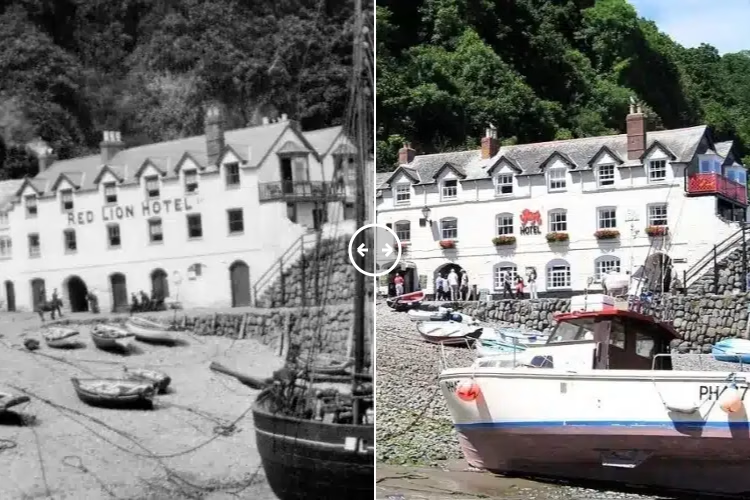
Clovelly Harbour Then & Now
Discover how Clovelly Harbour has changed through historic and modern photographs.
A little history of Clovelly Harbour
Clovelly Harbour
Clovelly Harbour, located in North Devon, England, has been a focal point of the village's maritime heritage for centuries. The area has been inhabited since the Iron Age, with evidence of a hillfort at Windbury Head northwest of the village. Following the Norman Conquest in 1066, the Manor of Clovelly was acquired by William the Conqueror and was listed in the Domesday Book of 1086 as "Clovelie." In the late 14th century, during the reign of Richard II, the manor was purchased by Sir John Cary, a judge whose family held the title for over 400 years.
In the late 16th century, George Cary, the squire of Clovelly, constructed a stone breakwater, creating a harbour that provided the only safe haven for ships along this stretch of the Devon coast between Appledore and Boscastle. He also built fish cellars and warehouses at the cliff base and cottages along the banks of the stream that provided the only route to the shore from the plateau above. This development transformed Clovelly into a bustling fishing village.
The village's unique character is further defined by its steep cobbled streets, which descend 400 feet to the harbour, making vehicular access impossible. Goods are traditionally transported using sledges, a practice that continues today. Clovelly's preservation owes much to the Hamlyn family, who acquired the estate in 1738 and have maintained its distinctive charm. The village remains a working harbour, with fishing boats still operating from its quay, and continues to attract visitors interested in its rich maritime history.
Explore Clovelly Harbour comparisons