EXPLORE PLACES THROUGH TIME
Burnley Then & Now
Discover how Burnley has changed through historic and modern photographs.
A little history of Burnley
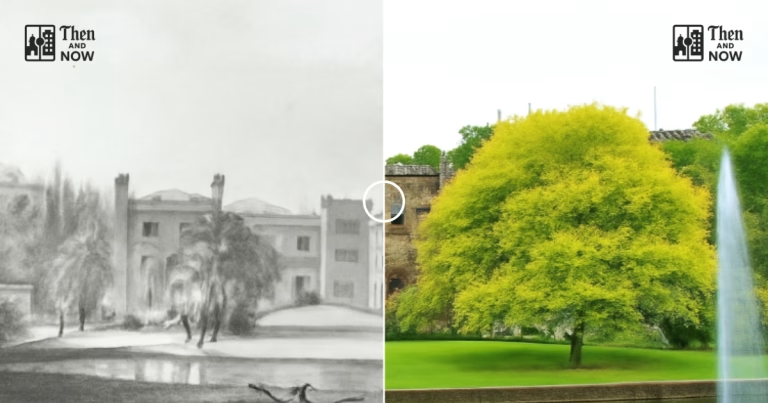
Burnley, located in Lancashire, England, has a rich history spanning several centuries. Evidence of prehistoric activity includes Stone Age flint tools and ancient structures like Castercliff hill fort, dating from around 600 BC. Roman presence is suggested by limited coin finds and the route of Gorple Road, which may have followed a Roman road to Ribchester. By the 7th century, the area was part of the kingdom of Northumbria, with place-names like Padiham and Habergham indicating Anglo-Saxon settlement. Following the Norman conquest, Burnley developed into a small farming community, gaining a corn mill in 1290 and a market in 1294. The town's population grew to about 1,200 by 1550, centred around St Peter's Church. The 18th century saw the rise of the textile industry, with the first cotton factories established along the River Calder. By 1901, Burnley boasted 700,000 spindles and 62,000 looms, alongside other industries like coal mining, brass and iron foundries, and paper mills. The town's population peaked at over 100,000 in 1911. Towneley Hall, the former seat of the Towneley family for over 600 years, is a Grade I listed building housing Burnley's art gallery and museum. Purchased by Burnley Corporation in 1902, it remains a significant historical landmark.
Explore Burnley comparisons