EXPLORE PLACES THROUGH TIME
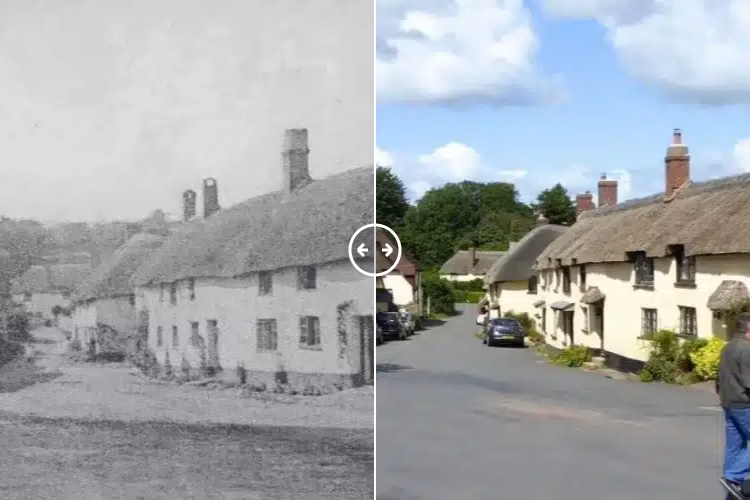
Broadhembury Then & Now
Discover how Broadhembury has changed through historic and modern photographs.
A little history of Broadhembury
Broadhembury, Devon
Broadhembury is a village and civil parish in East Devon, England, situated approximately 5 miles northwest of Honiton. The parish encompasses the hamlets of Kerswell, Dulford, Crammer Barton, Colliton, and Luton. According to the 2001 census, the population was 654.
The area is renowned for Hembury Fort, a prehistoric hill fort dating from around 3000 BC, which was also used by the Romans. The Saxons introduced the plough, leading to the cultivation of the land. Following the Norman Conquest in 1066, the manor was granted to Odo, Bishop of Bayeux. In the 16th century, the Drewe family acquired the estate, with Edward Drewe constructing The Grange, a 16th-century mansion house, around 1603.
The village's architecture features thatched and cob cottages dating back to the 16th and 17th centuries. St Andrew's Church, consecrated in 1259, showcases a 1480 tower and a 1520 porch. Notable individuals associated with Broadhembury include Augustus Montague Toplady, author of the hymn "Rock of Ages," who served as vicar from 1768 to 1778.
Explore Broadhembury comparisons