EXPLORE PLACES THROUGH TIME
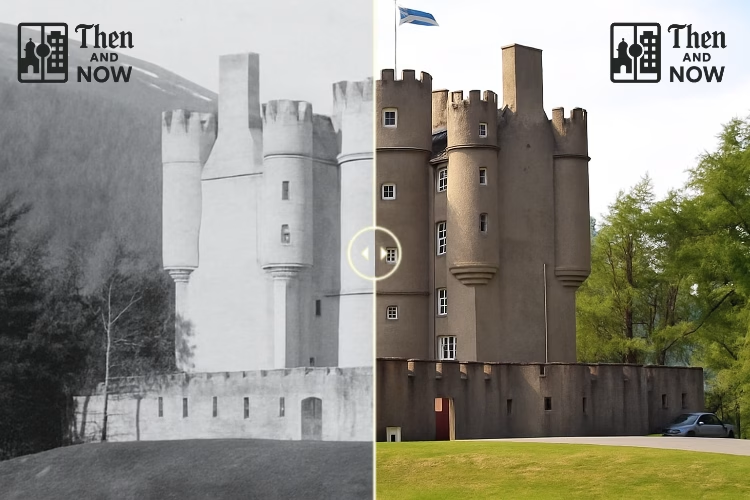
Braemar Then & Now
Discover how Braemar has changed through historic and modern photographs.
A little history of Braemar
Braemar is a village in Aberdeenshire, Scotland, situated at the upper end of the historical Earldom of Mar, literally the Braes o' Mar. The Scottish Gaelic name Bràigh Mhàrr ('Upland of Mar') was originally applied to the general area; using Braemar for the village dates to around 1870.
The modern village developed from two separate hamlets on each bank of the Clunie Water: Auchendryne on the west and Castleton on the east. Castleton was associated with Kindrochit Castle, whose ruins are located within the modern village. The name 'Kindrochit' means 'bridge end', referring to a timber bridge built by Malcolm III in the 11th century to connect the two banks. The current Braemar Castle, constructed in 1628 by the Earl of Mar, replaced an earlier structure and served as a hunting lodge and fortified residence.
Braemar has a rich history, notably as a focal point during the Jacobite uprisings. In 1715, the Earl of Mar raised the Jacobite standard in Braemar, marking the beginning of the 1715 Jacobite Rising. The village's strategic location at the crossing of the Clunie Water made it a significant site for trade and military movements throughout history.
Explore Braemar comparisons