EXPLORE PLACES THROUGH TIME
Barkisland Then & Now
Discover how Barkisland has changed through historic and modern photographs.
A little history of Barkisland
Barkisland, West Yorkshire
Barkisland, situated in West Yorkshire, England, has a rich history marked by its industrial evolution and architectural heritage. The village's name's origin is debated; some suggest it derives from a chieftain named 'Barkis,' while others propose it means 'low-lying enclosures where birches grow.'
In the 18th century, Bowers Mill was established as a water-powered fulling mill, later transitioning to a worsted and woollen mill. By 1882, J. & S. Taylor Ltd occupied the mill until 1991, after which it was repurposed for smaller businesses. Barkisland Mill, a six-storey structure, operated as a textile mill in the 19th and 20th centuries before being converted into residential flats in the early 21st century.
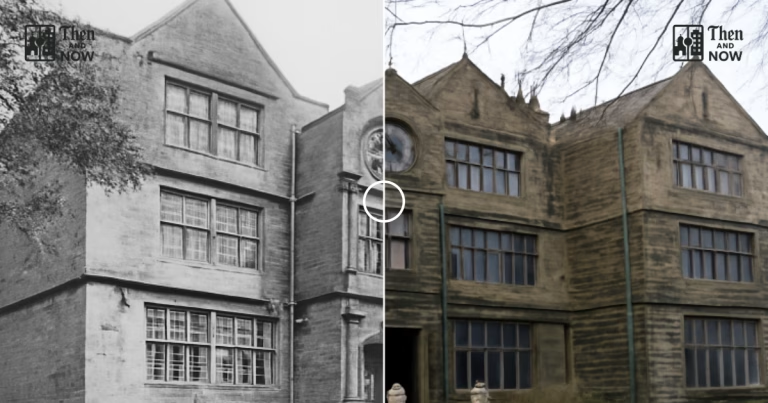
The village's architectural landscape includes Barkisland Hall, a Grade I listed country house built in 1638 for John Gledhill. Constructed in stone with an F-shaped floor plan, it was acquired in 1967 by Lord Kagan to house his textile company, known for producing Gannex raincoats. Christ Church, built between 1852 and 1854, is another notable structure, featuring a nave, aisles, and a chancel, all constructed in stone with a slate roof.
The village's industrial heritage is further evidenced by the remnants of mill chimneys, such as the one on Steele Lane, and the former Sonoco recycling works on Dog Lane, highlighting the area's industrial past. These sites reflect Barkisland's transformation from a rural settlement to an industrial hub, with many buildings now repurposed for residential and commercial use.
Explore Barkisland comparisons