EXPLORE PLACES THROUGH TIME
Banbury Then & Now
Discover how Banbury has changed through historic and modern photographs.
A little history of Banbury
Banbury, situated in Oxfordshire, England, has a rich history dating back to the British Iron Age, with evidence of circular buildings from around 200 BC found in the Hennef Way area. The Saxons established a settlement on the west bank of the River Cherwell in the late 5th century, and by the mid-6th century, Banbury had become a local centre for Anglo-Saxon settlement. The town's strategic location at the junction of two ancient roads, Salt Way and Banbury Lane, facilitated its development as a market town.
In the 12th century, Banbury was granted its first market charter, leading to the establishment of the Market Place as the town's commercial hub. The Market Place has served as the primary focal point for commerce and community life for over eight hundred years, hosting traditional markets and public gatherings. The town's prosperity was further bolstered by the wool trade during the medieval period.
Banbury's historical significance is also marked by the construction of Banbury Castle in 1135 by Alexander, Bishop of Lincoln. The castle played a role during the English Civil War, being besieged in 1645 before its demolition in 1648. The arrival of the Oxford Canal in 1778 and the railway in 1850 further spurred the town's growth and economic development. Today, Banbury continues to thrive as a market town, with its historic Market Place remaining a central feature of community life.
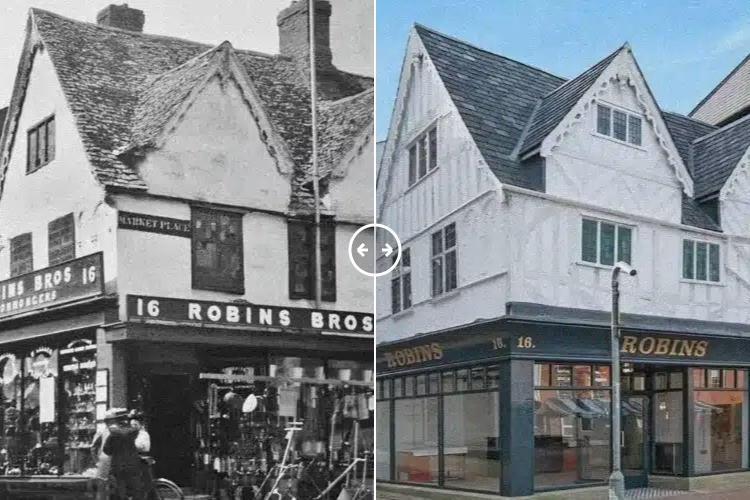
Explore Banbury comparisons