EXPLORE PLACES THROUGH TIME
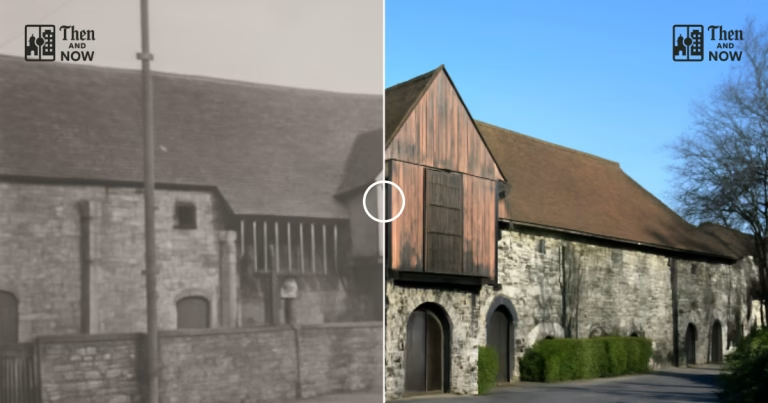
Armagh Then & Now
Discover how Armagh has changed through historic and modern photographs.
A little history of Armagh
Armagh, situated in Northern Ireland, is renowned for its rich ecclesiastical heritage and Georgian architecture. The city is distinguished by two cathedrals dedicated to Saint Patrick, reflecting its status as a pivotal religious centre. The Church of Ireland cathedral, established around 445 AD, and the Roman Catholic cathedral, constructed in the latter half of the 19th century, are prominent landmarks.
In the 18th century, under Archbishop Richard Robinson, Armagh underwent significant transformation, acquiring much of the Georgian architecture that still defines its character today. Robinson's vision led to the creation of elegant Georgian streetscapes, including The Mall, Charlemont Place, and Beresford Row.
The city's industrial heritage is marked by the linen industry, which flourished in the 19th century. Armagh became a central hub for linen production, with the value of its annual output estimated at over £500,000 by the early 19th century.
Architecturally, Armagh boasts several notable buildings. The Archbishop's Palace, built in 1770, served as the residence for Church of Ireland Archbishops for over two centuries. The Armagh Courthouse, designed by Francis Johnston in the Neoclassical style and completed in 1809, remains a Grade A listed building.
In recent years, Armagh has undertaken substantial restoration projects to preserve its historic buildings. A £6.3 million investment has been directed towards restoring up to 15 historic structures, including the Seven Houses terrace and properties on Barrack Street, enhancing the city's architectural heritage.
These efforts underscore Armagh's commitment to preserving its rich history and architectural legacy.
Explore Armagh comparisons