EXPLORE PLACES THROUGH TIME
Argyll and Bute Then & Now
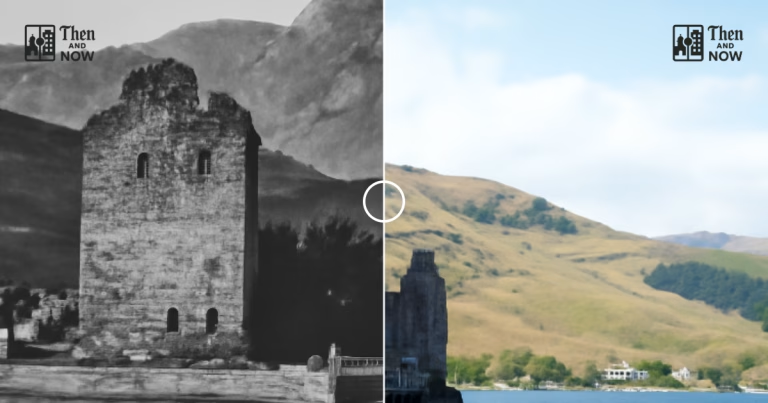
Discover how Argyll and Bute has changed through historic and modern photographs.
A little history of Argyll and Bute
Argyll and Bute, located in the southwest of Scotland, is a region rich in history and natural beauty. The area encompasses the historic counties of Argyllshire and Bute, each with its own distinct heritage. In 1975, these counties were administratively combined to form the Argyll and Bute district, which later became a unitary council area in 1996.
The region's history dates back to ancient times, with the Kilmartin Valley in Mid Argyll housing Scotland's richest prehistoric landscape, featuring numerous cairns, standing stones, and other ancient remains dating back to around 3000 B.C. In the 12th century, the blending of Gaelic and Norse cultures led to the formation of the Lordship of the Isles, a significant political entity that influenced the region's development.
The area also played a role in Scotland's military history. The Argyll and Bute Militia, established in the late 18th century, was active during the Napoleonic Wars, serving in Ireland and at Edinburgh Castle. Additionally, the region's economy has been historically supported by industries such as herring fishing and whisky distilling, with Campbeltown being a notable center for malt whisky production.
Today, Argyll and Bute continues to be a region of historical significance, offering insights into Scotland's past through its landscapes, architecture, and cultural heritage.
Explore Argyll and Bute comparisons